Sustainable Layers
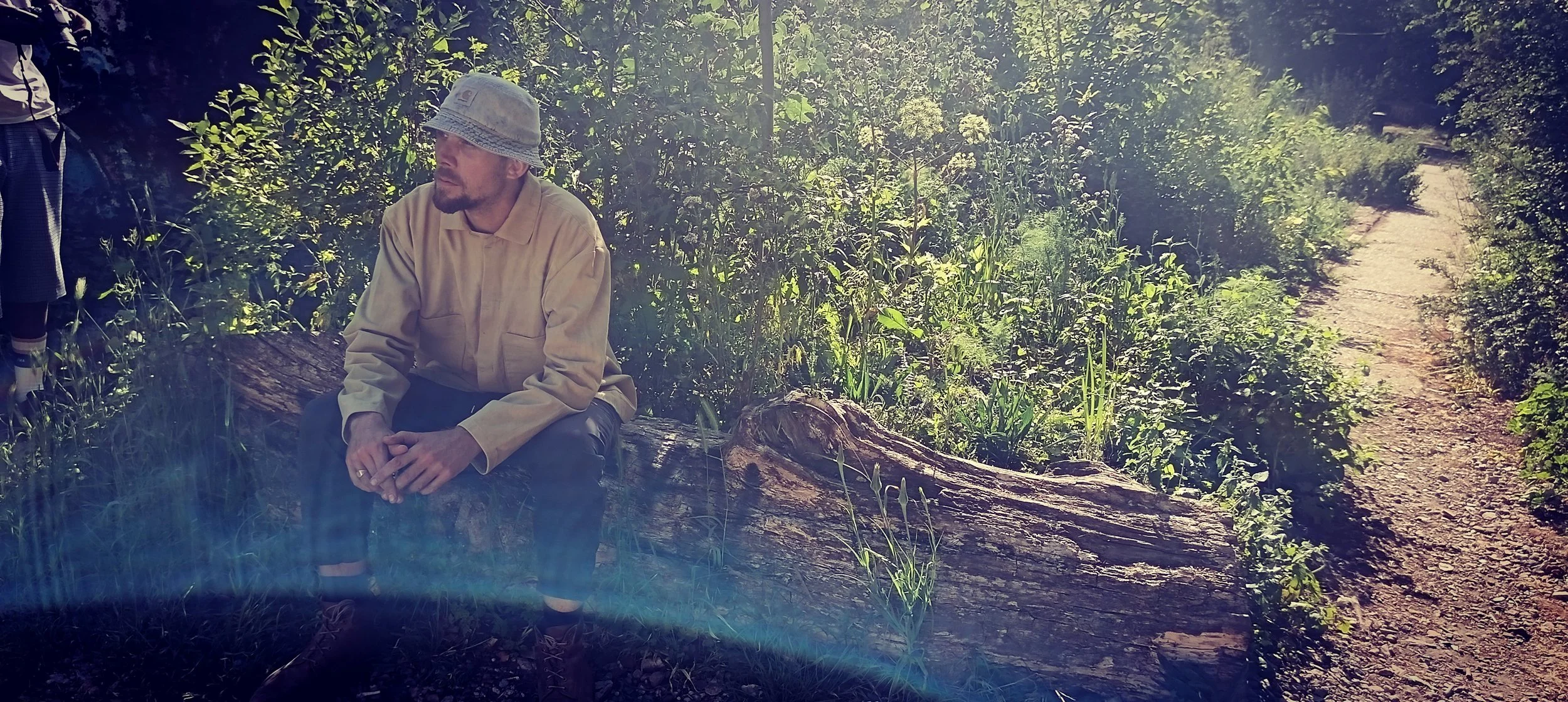
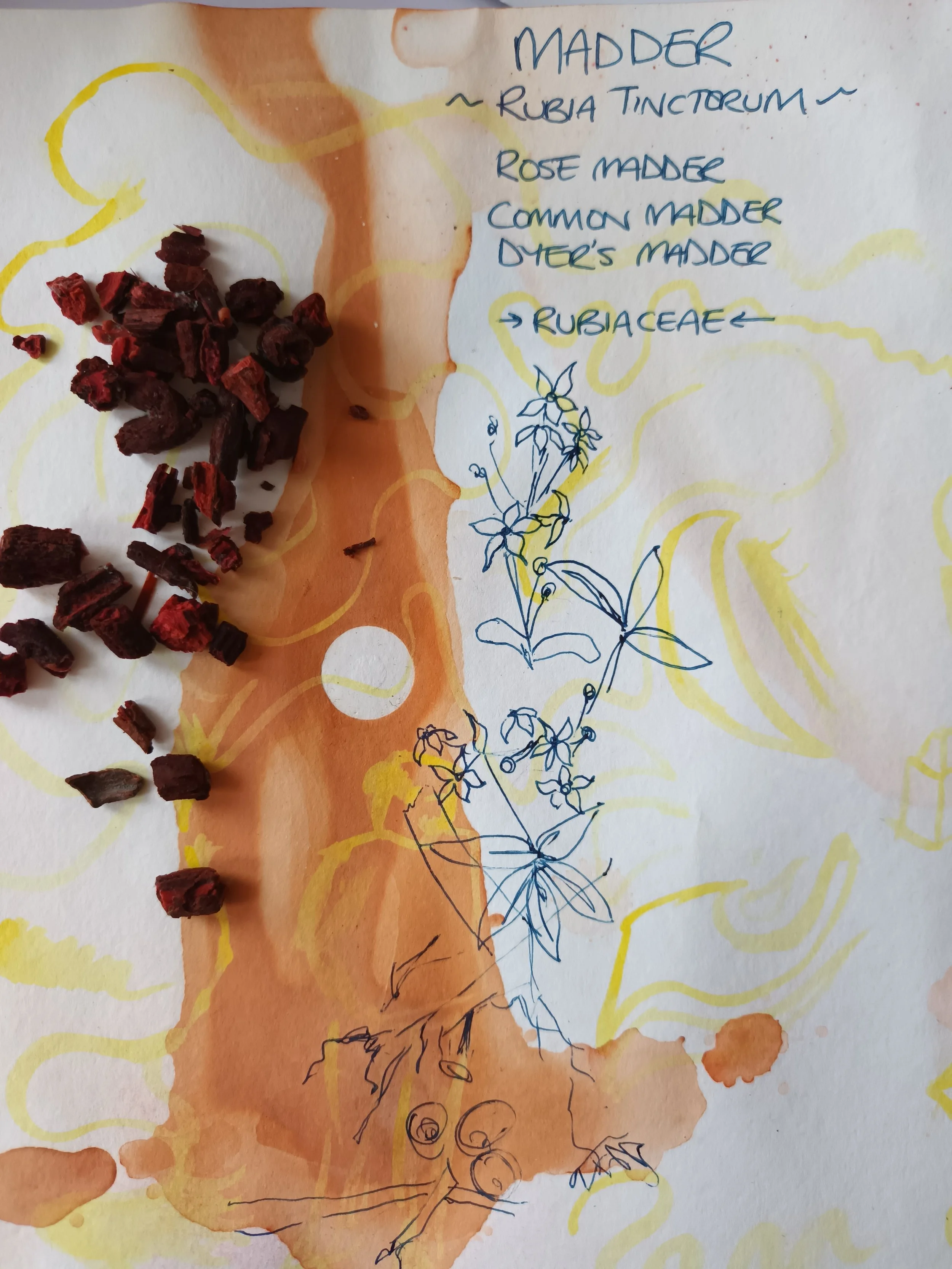
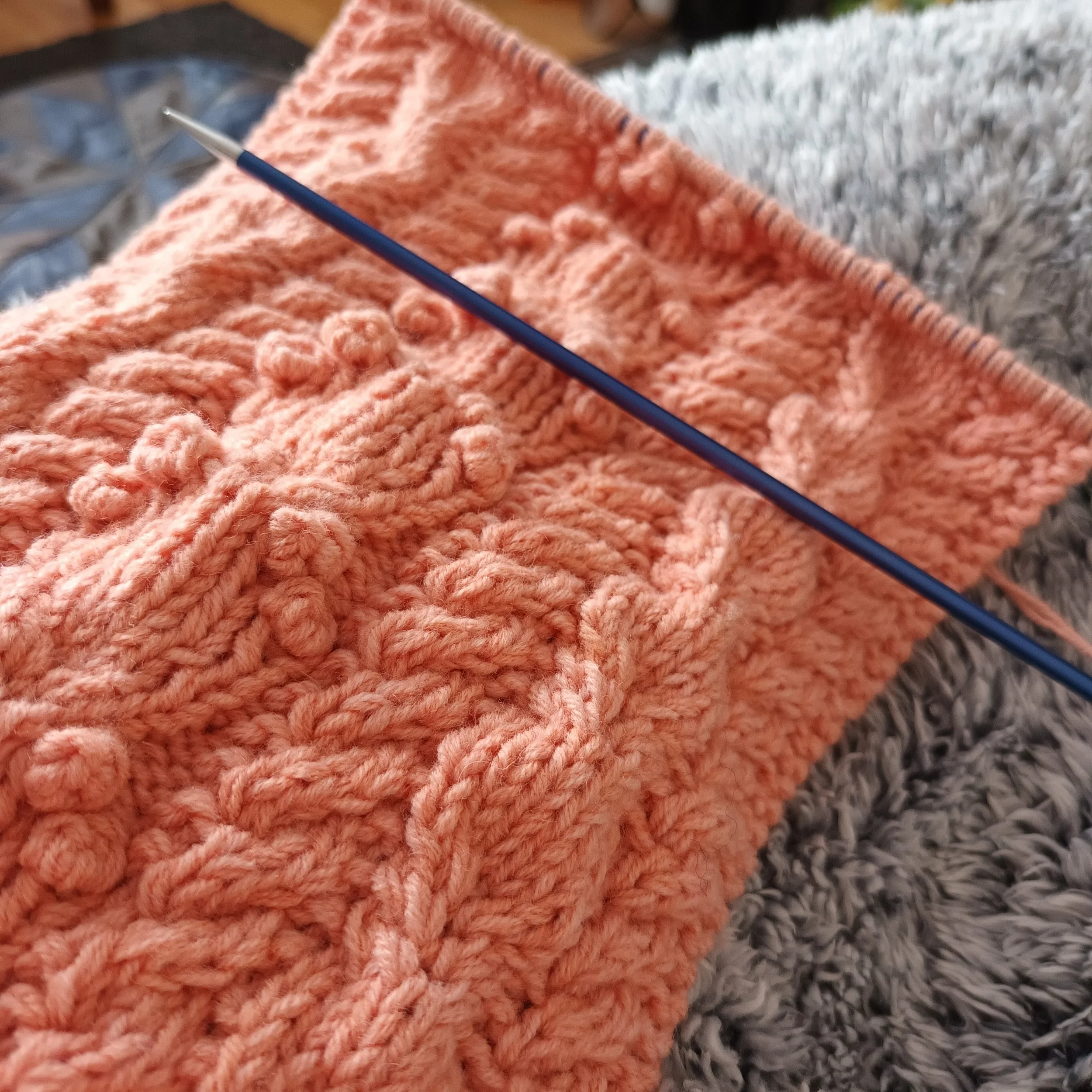
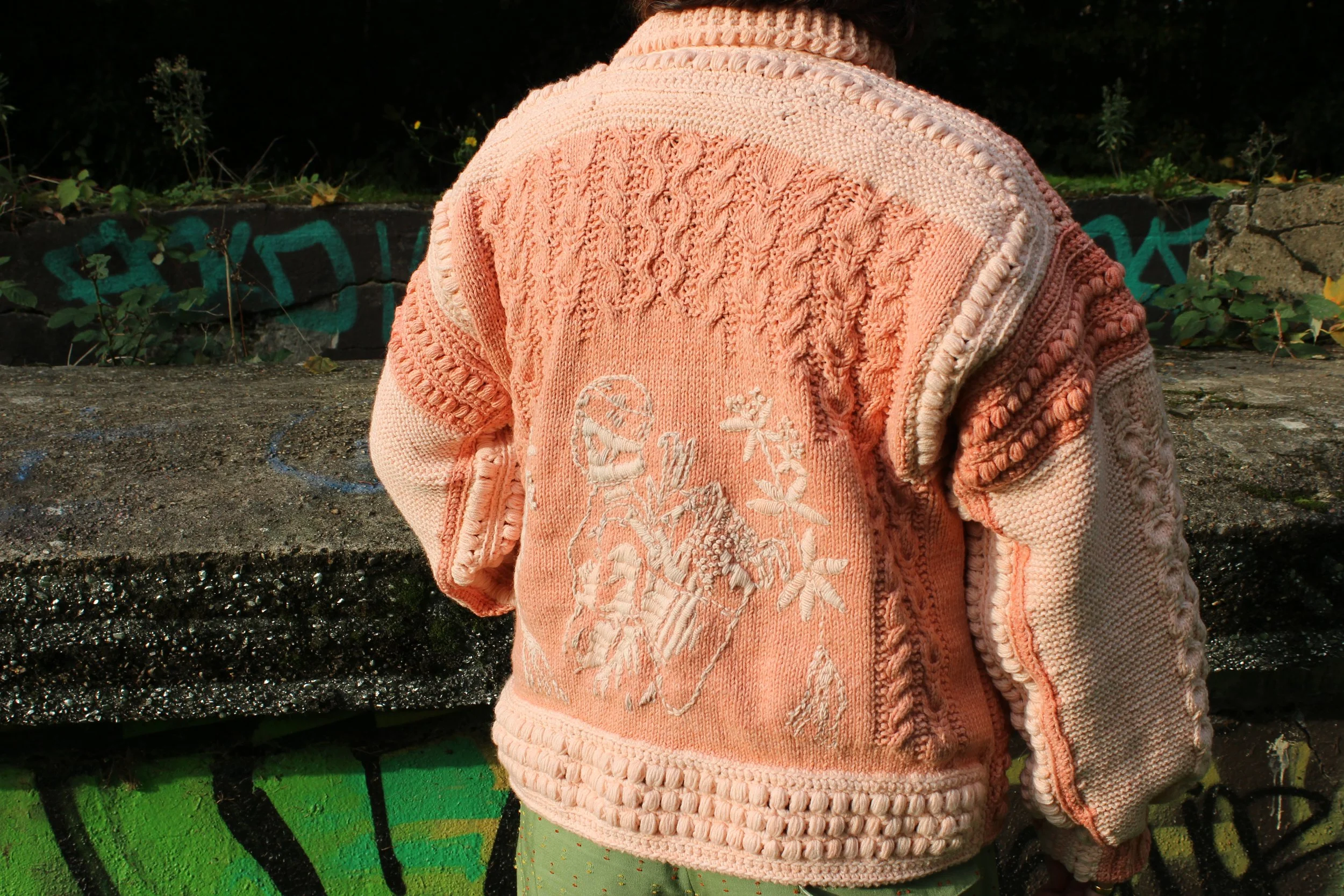
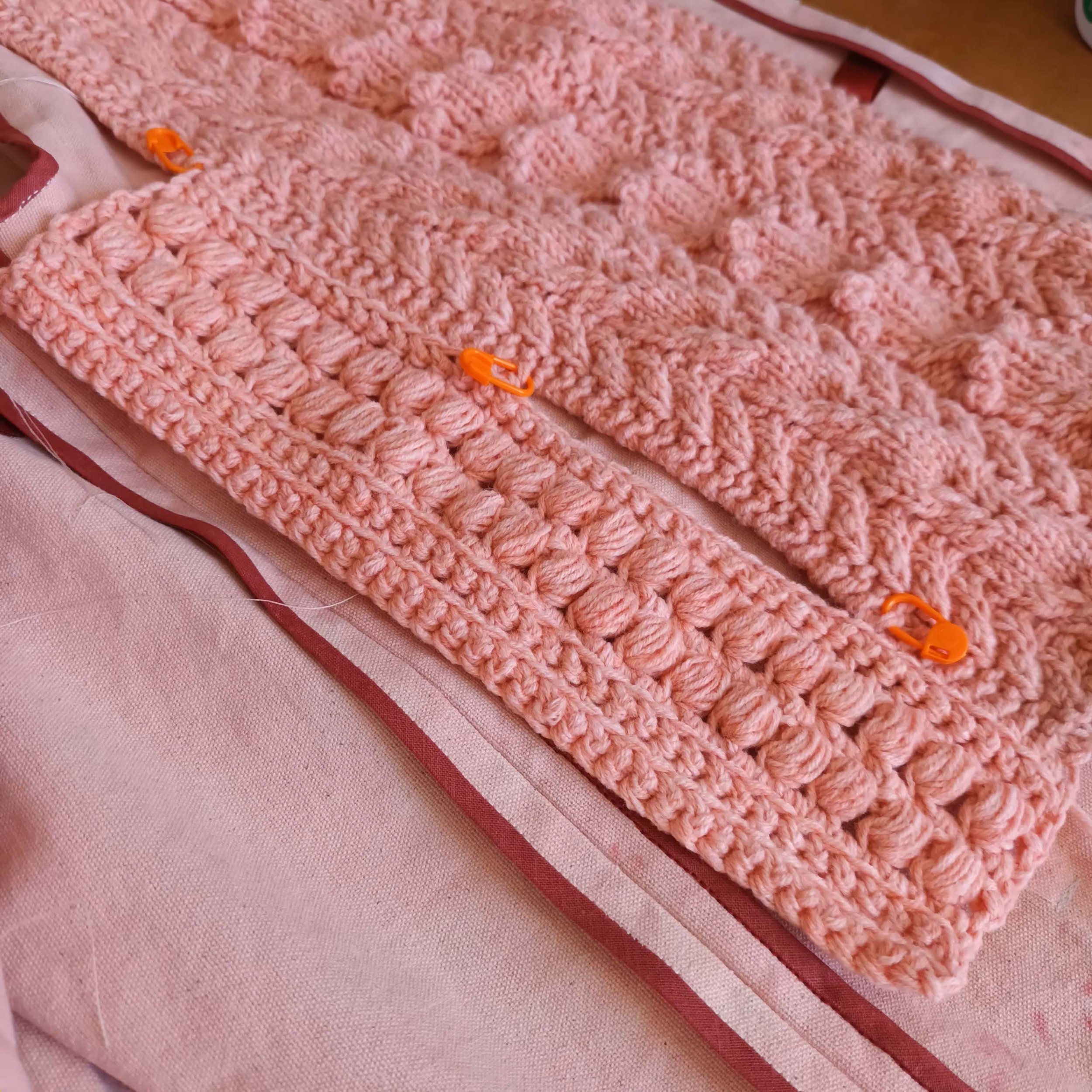
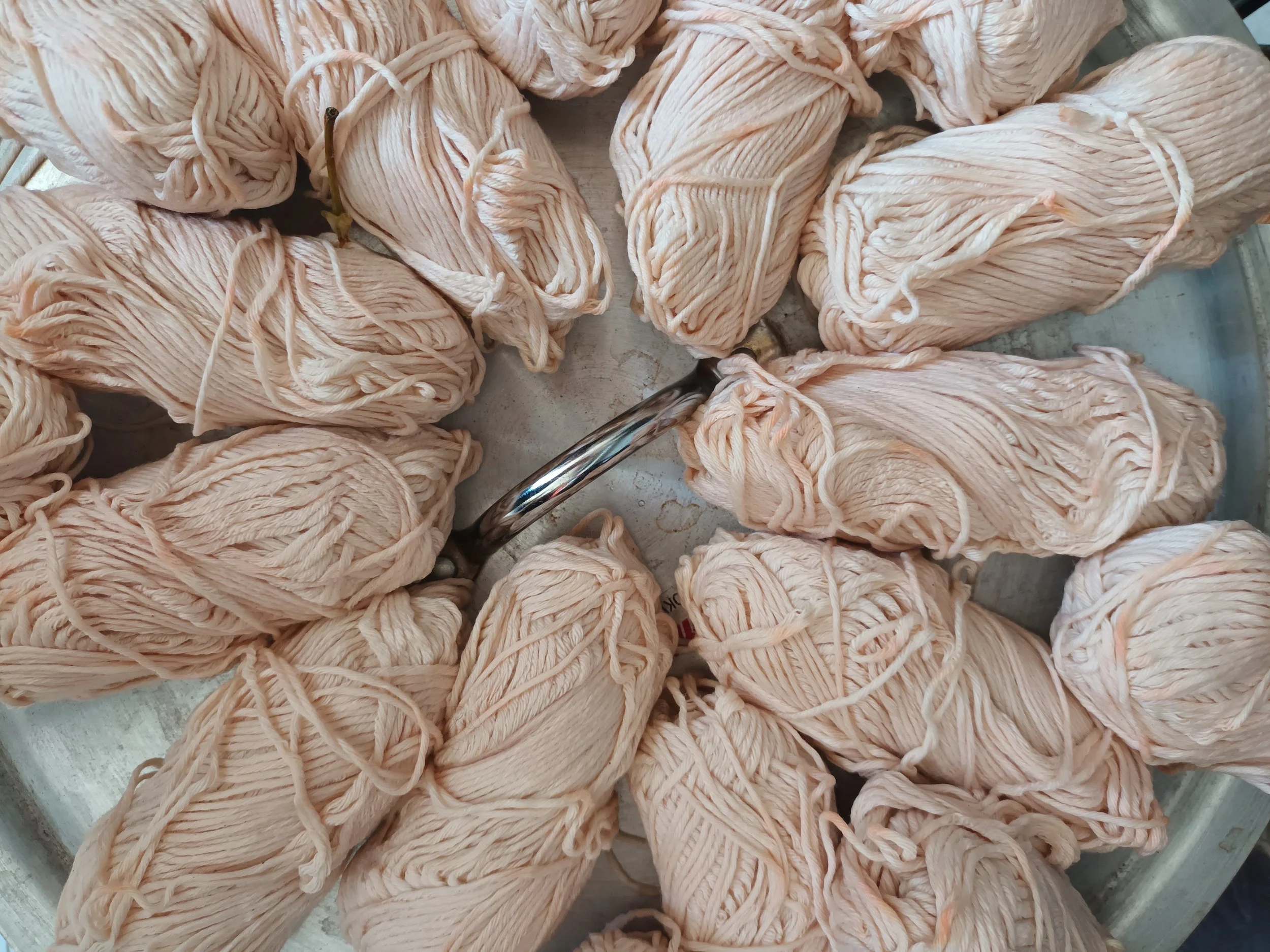
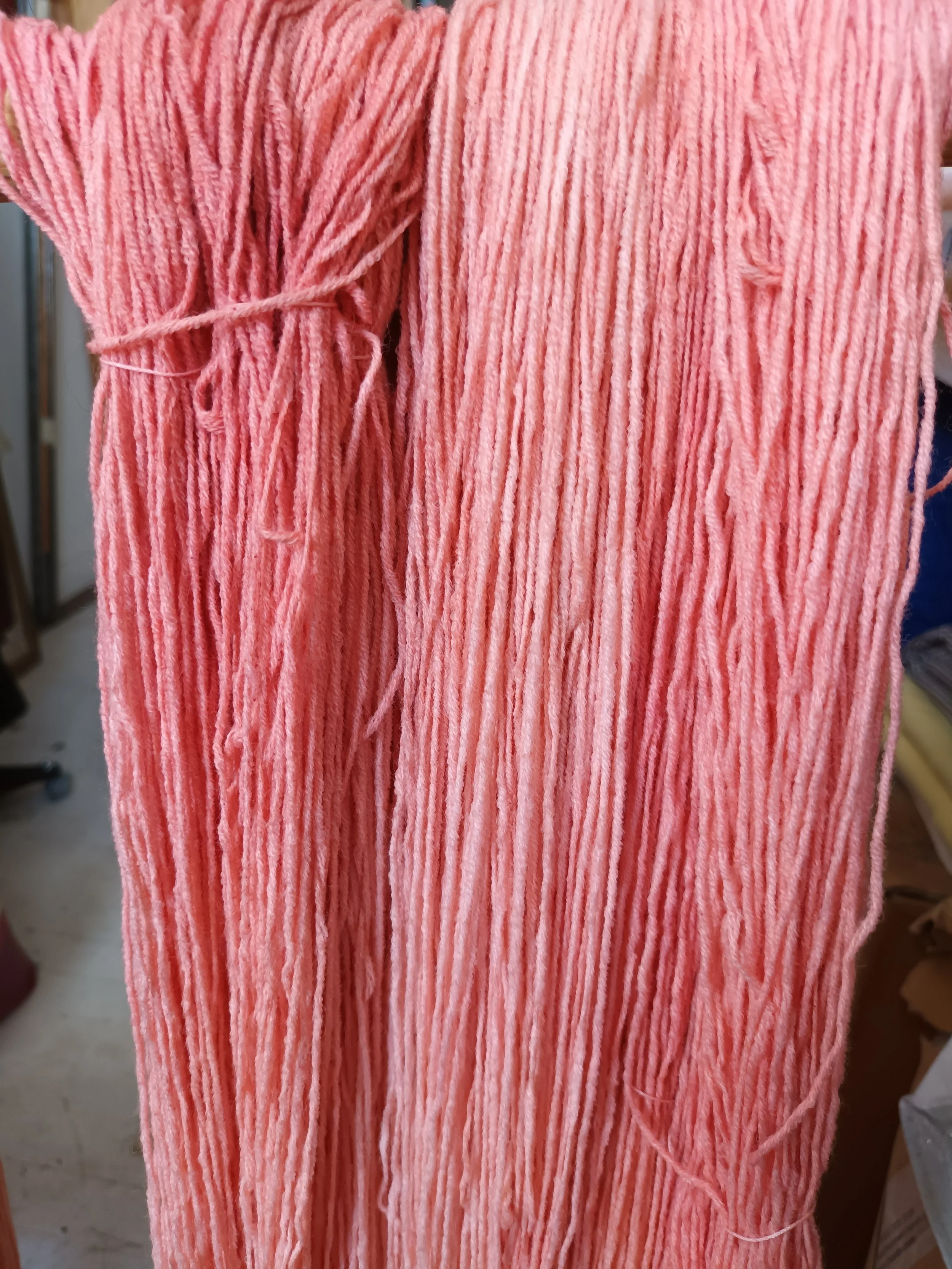
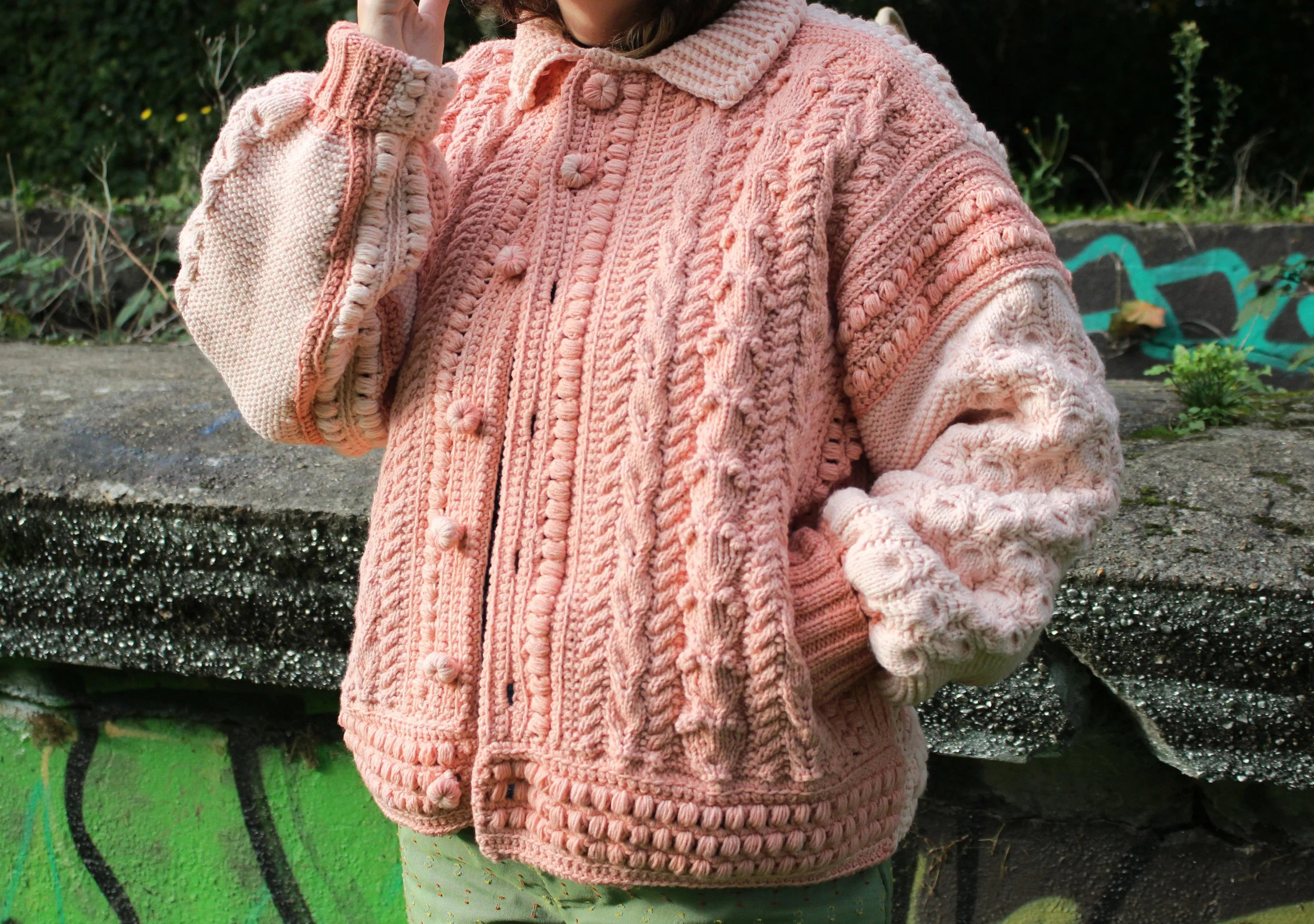
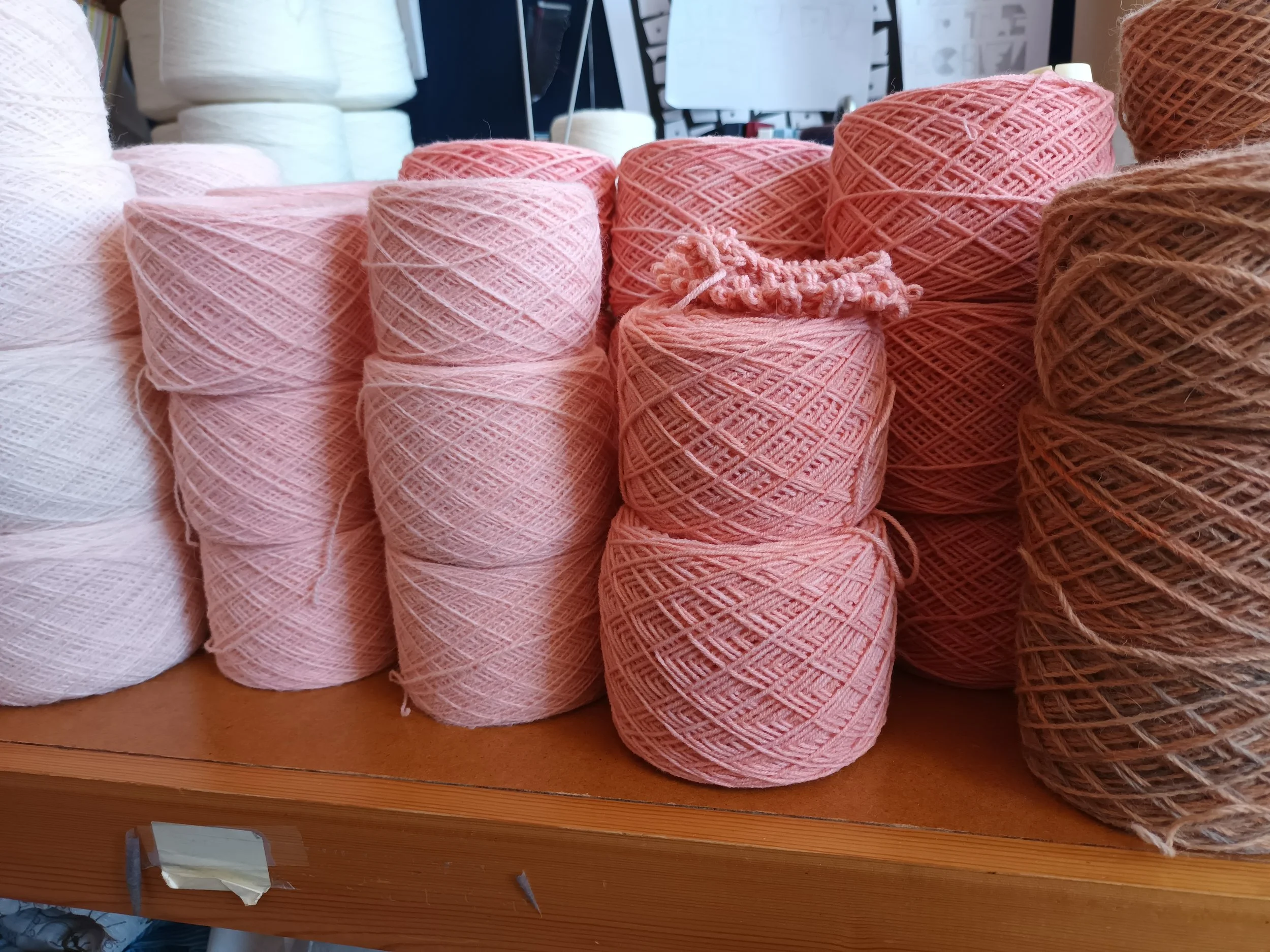
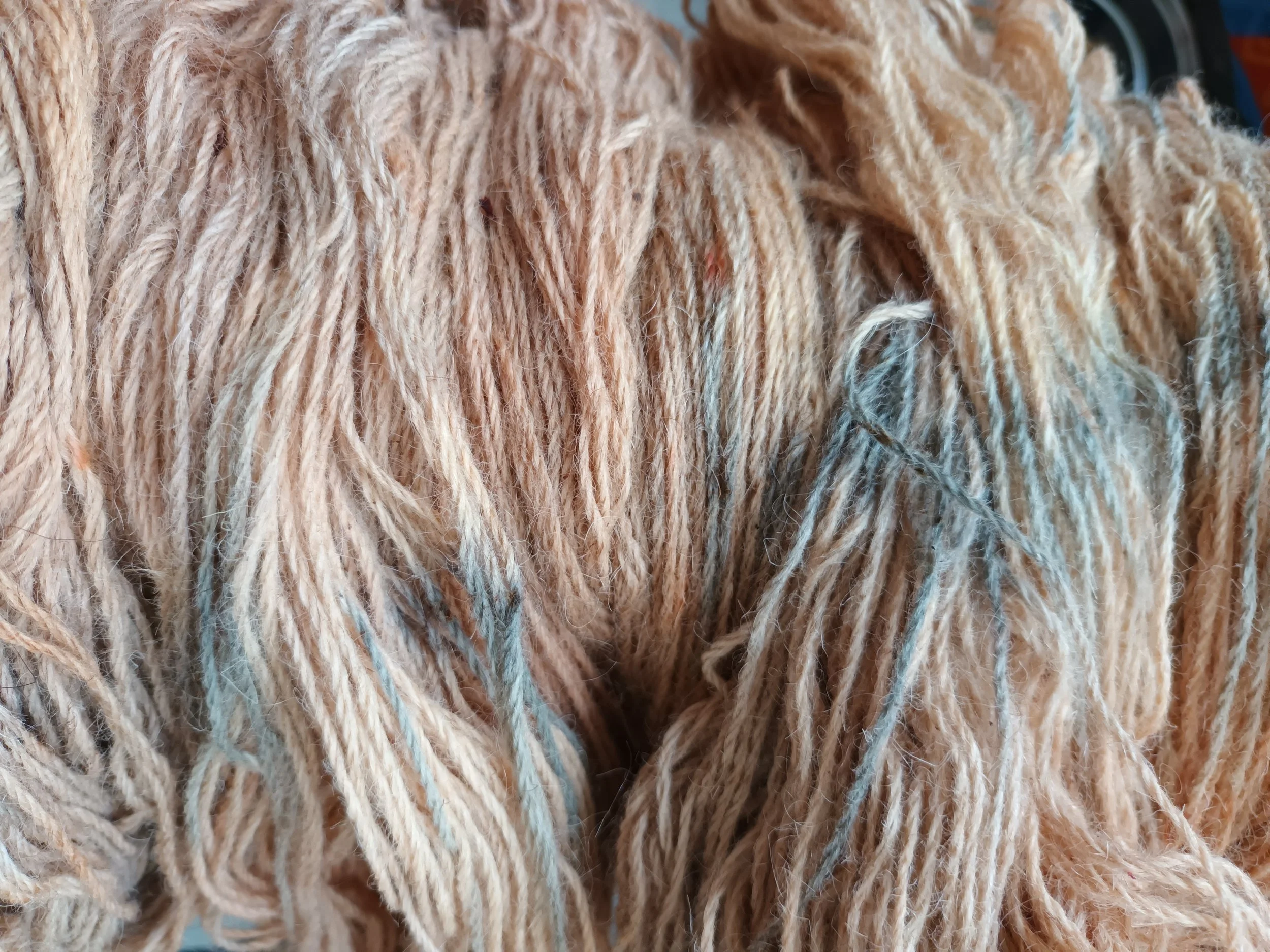
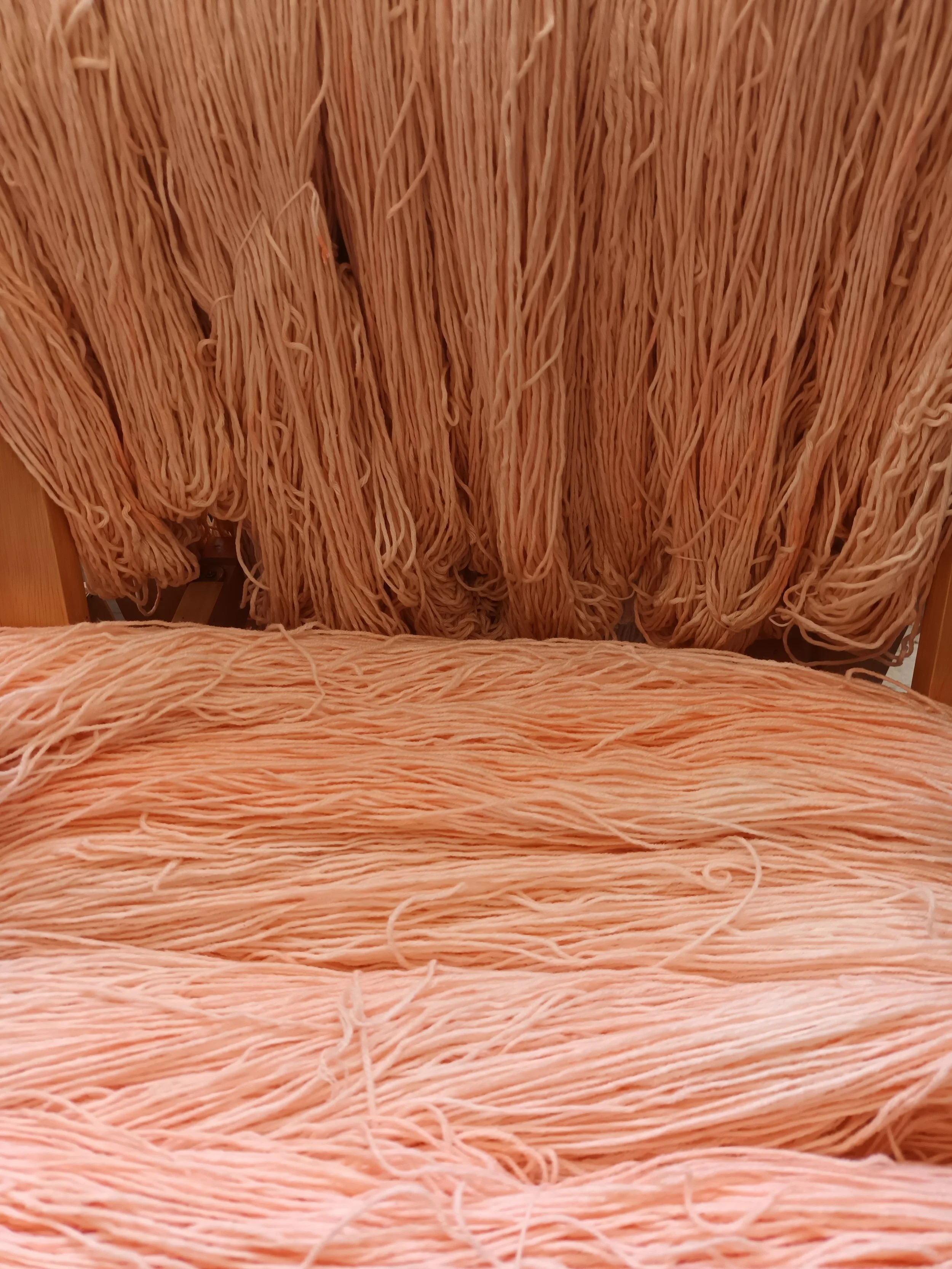
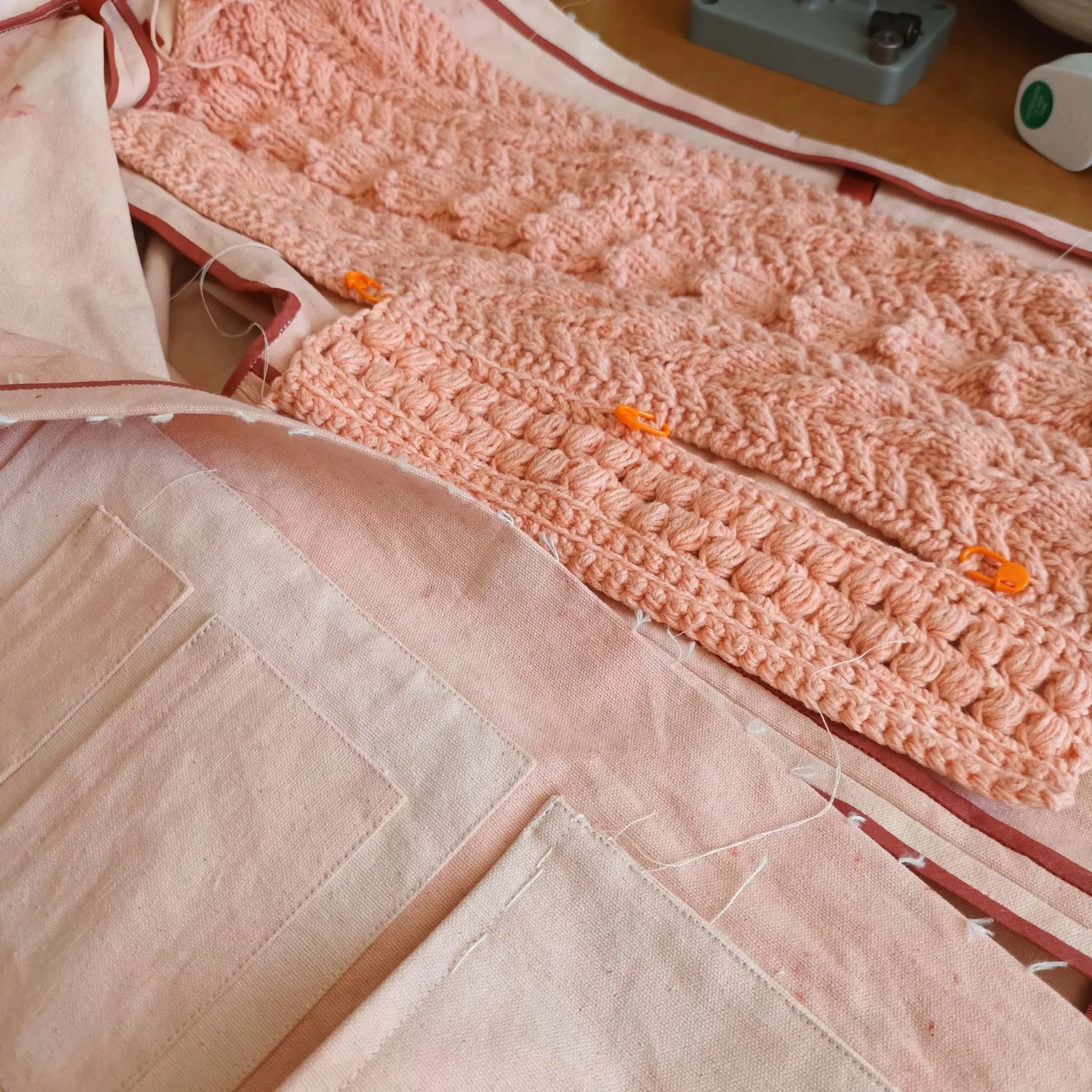
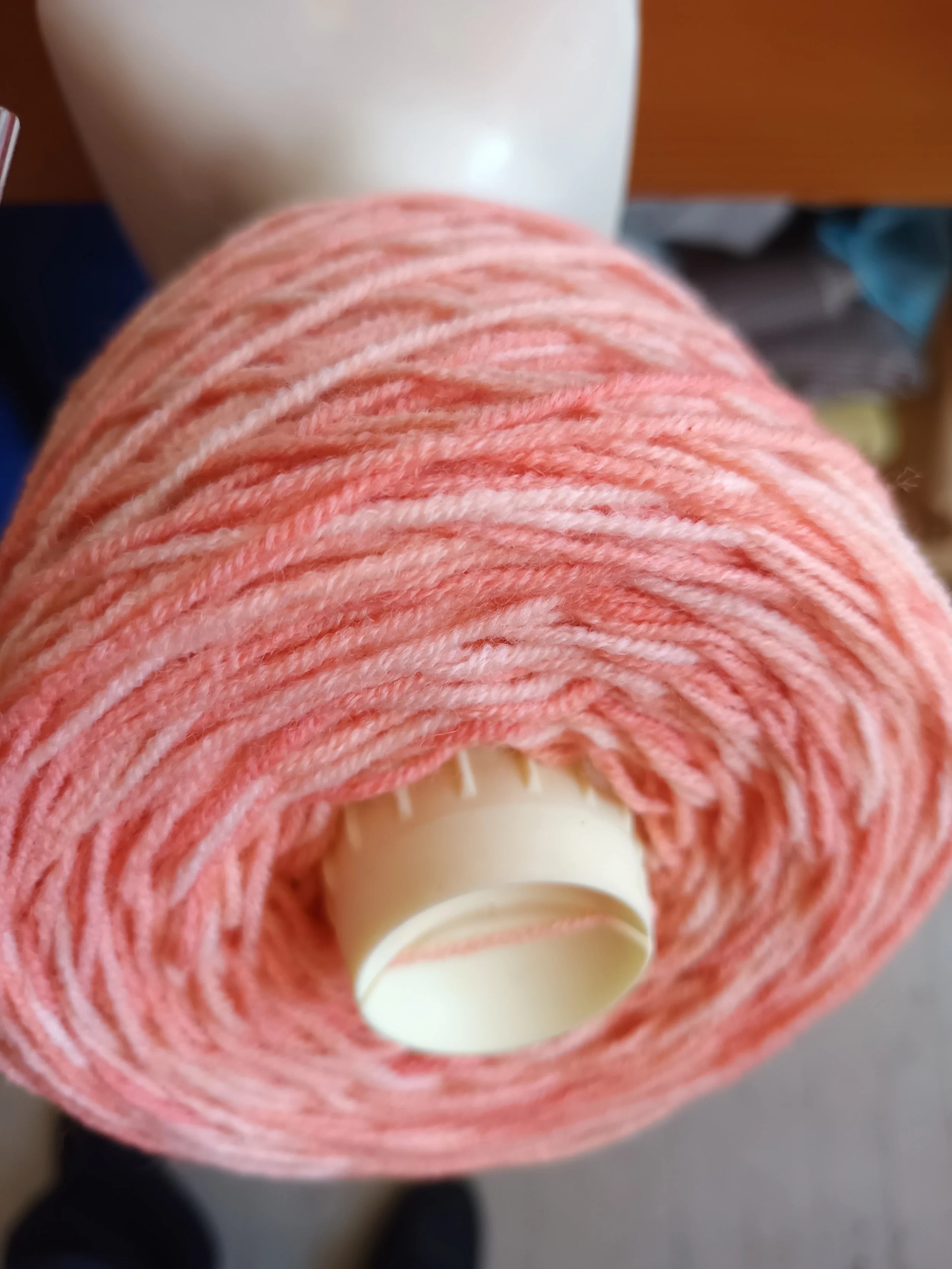
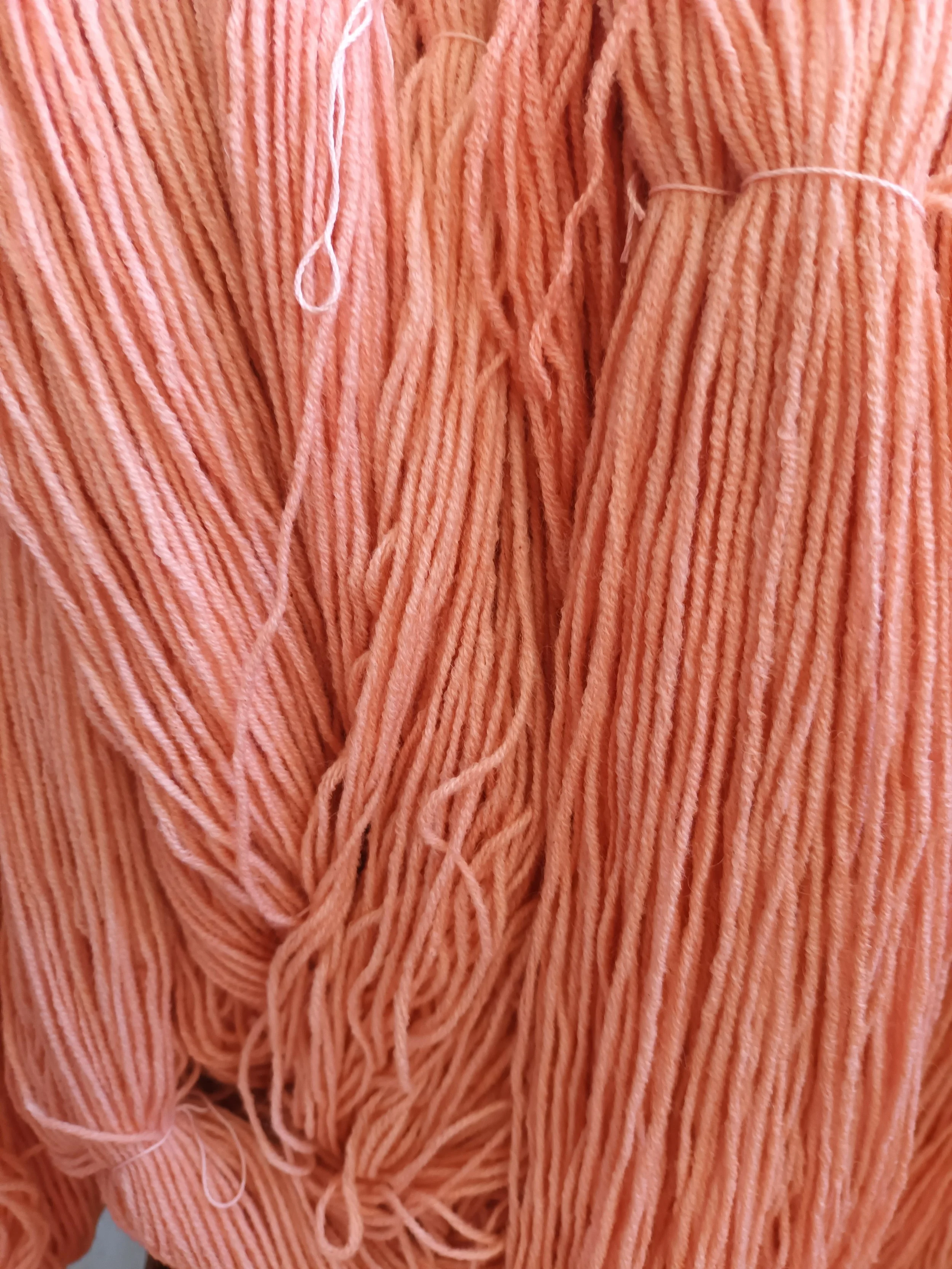
The Harvest Garment is a hand-knitted textile artwork created using madder (Rubia tinctorum) grown on my allotment and dyed onto deadstock yarn. Originally exhibited as part if ‘Soil, Toil & Table’ exhibition at The Lethaby Gallery, Central Saint Martins, the piece explores the creative possibilities of plant dyeing and our reciprocal relationship with the natural world.
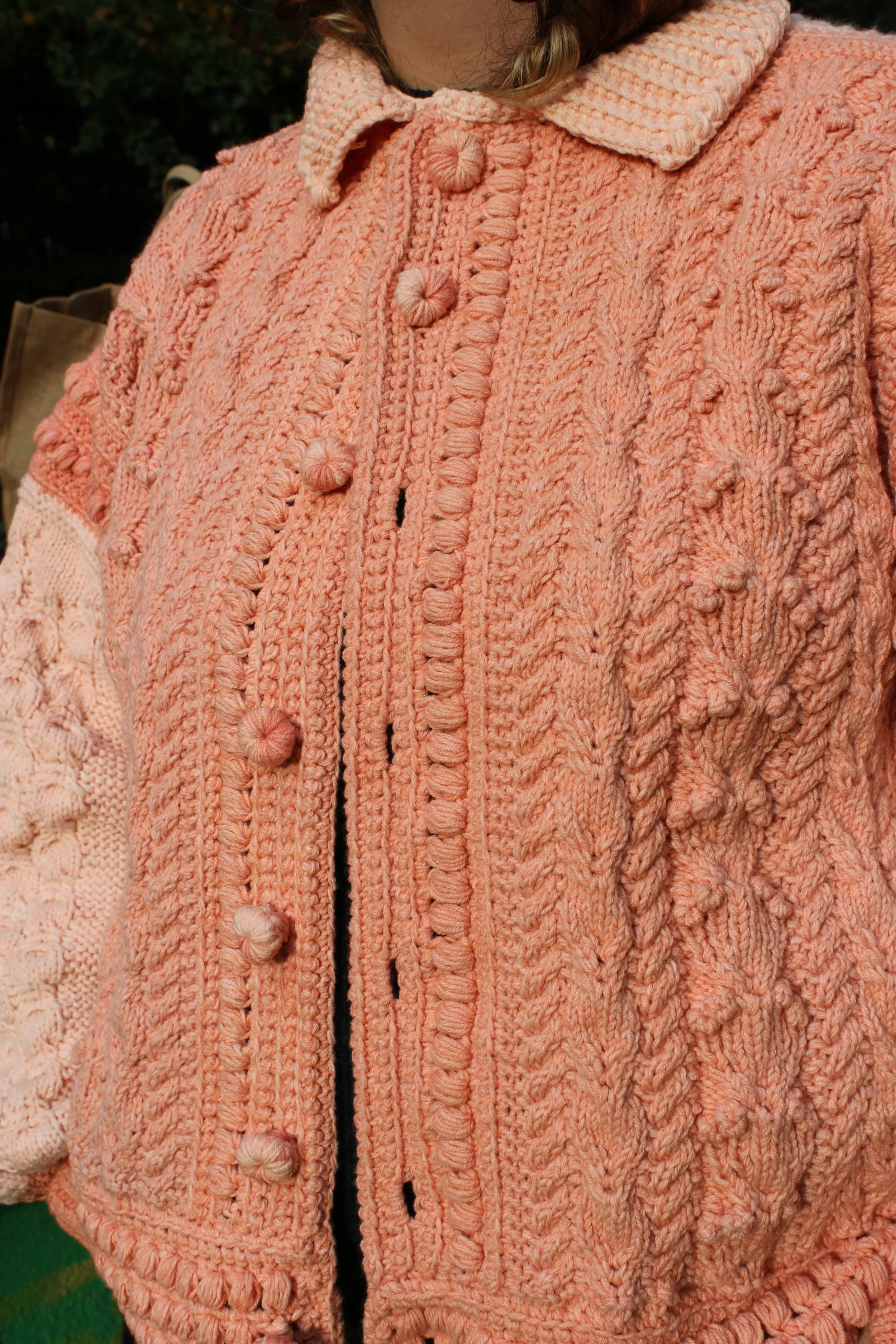
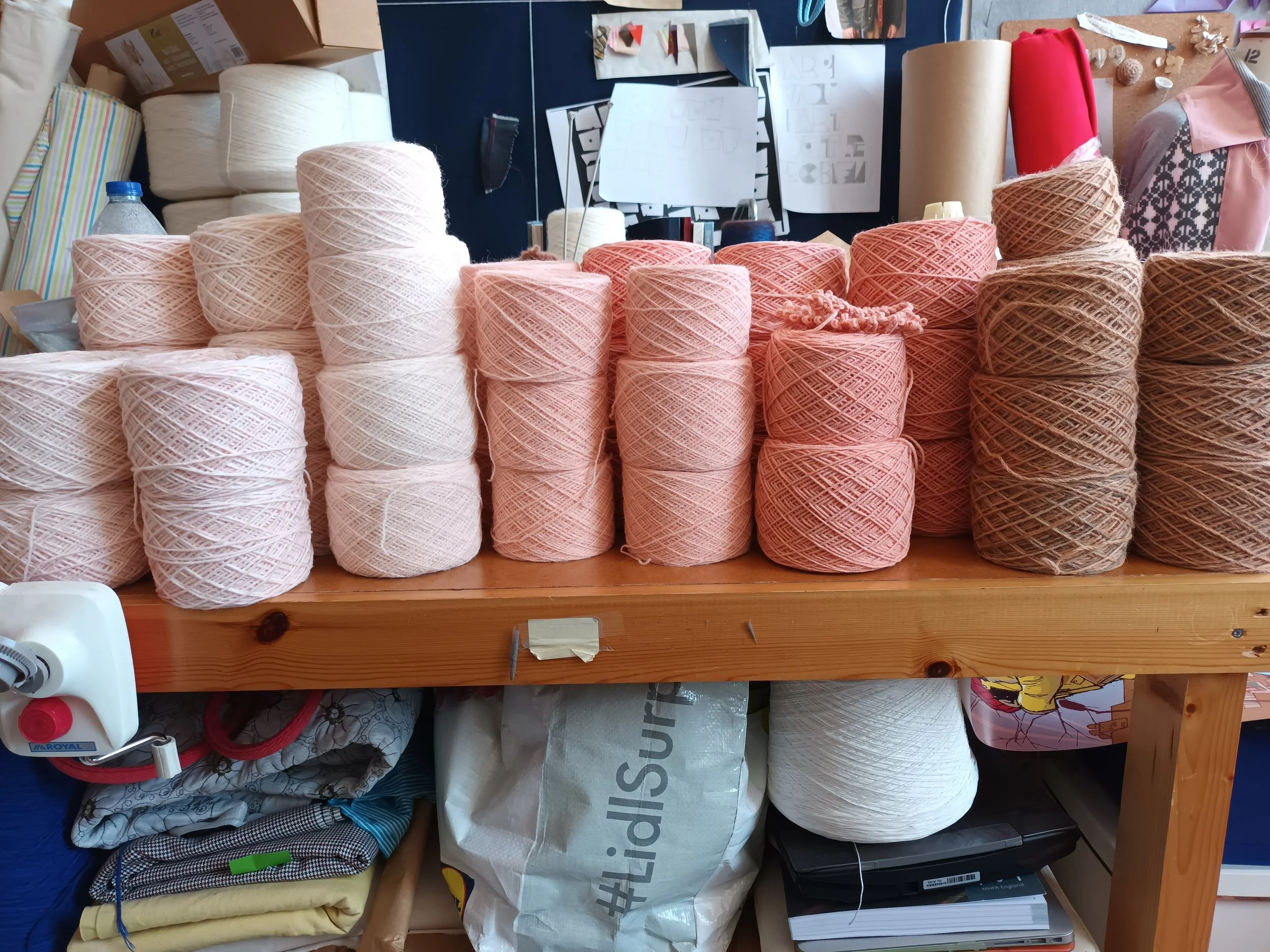
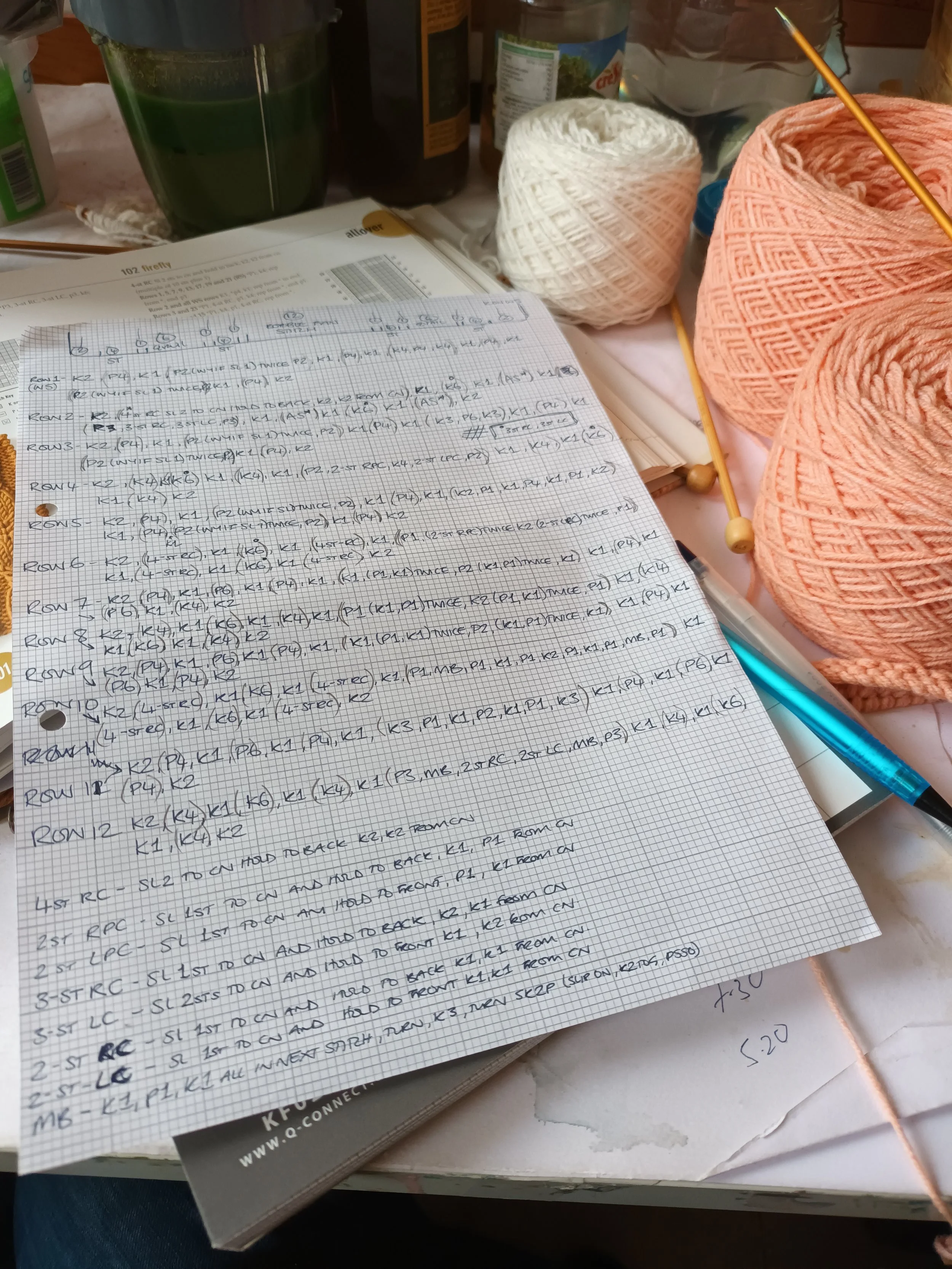
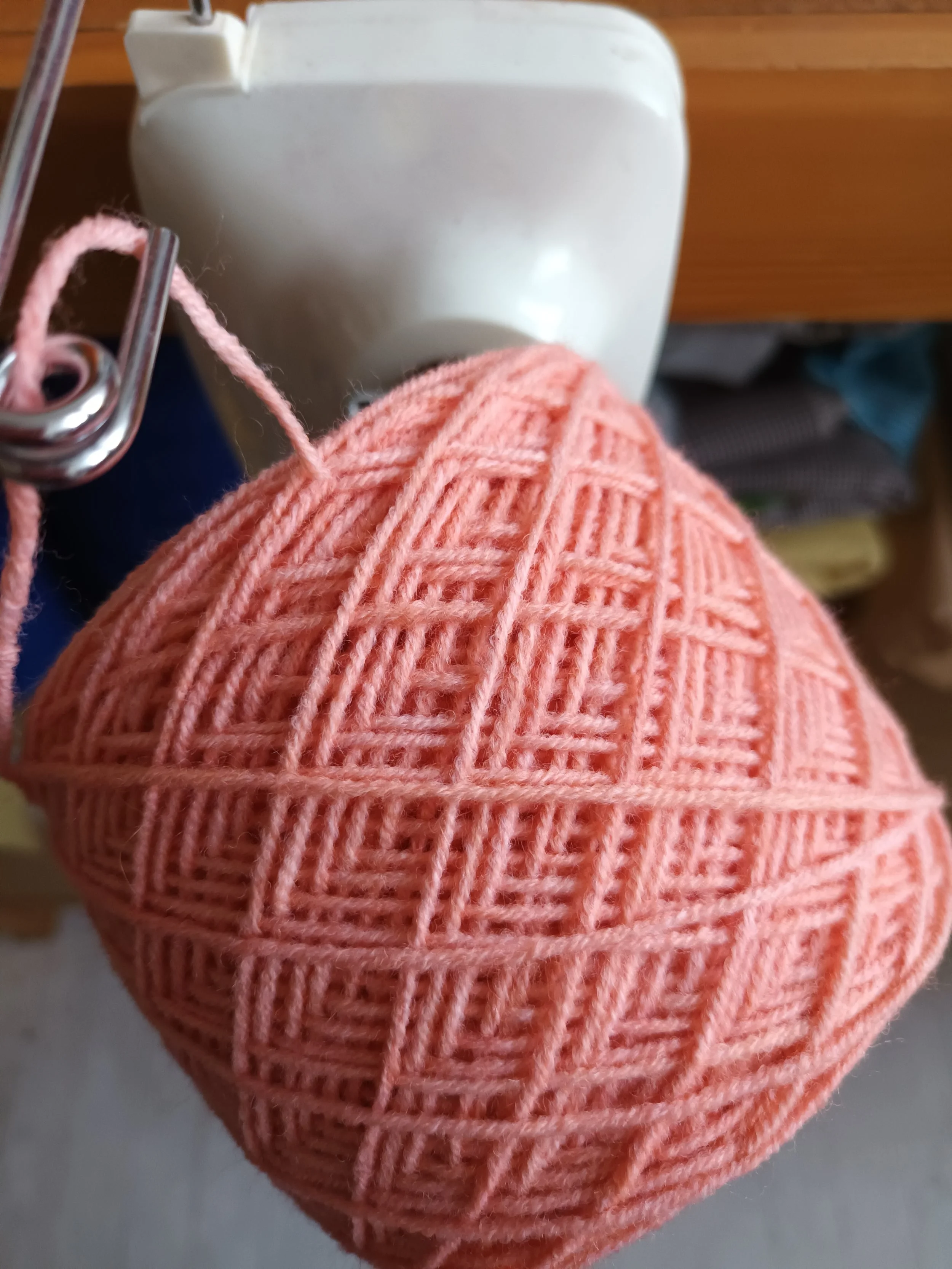
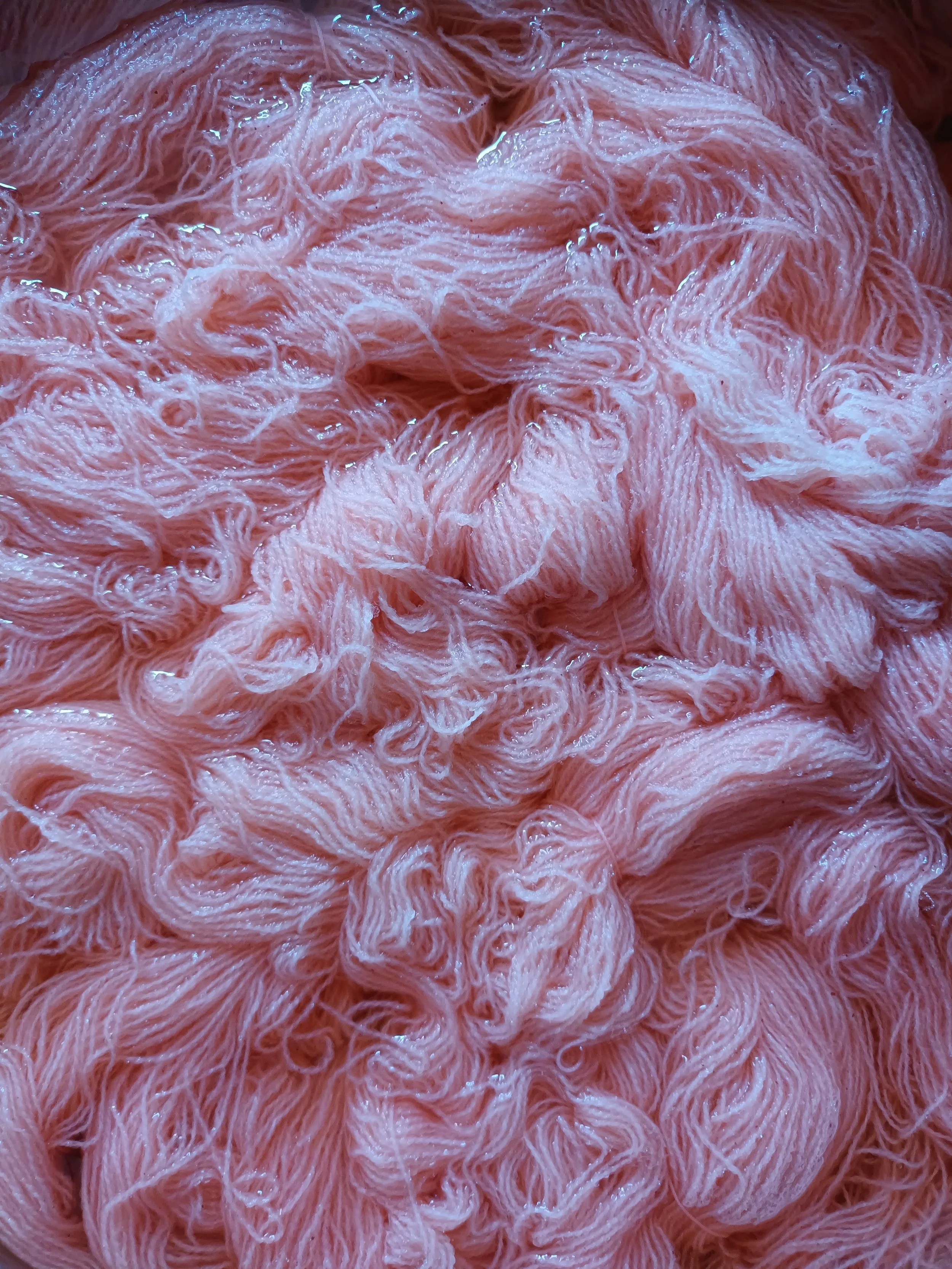
Every stage of the process from cultivating the madder roots and extracting the dye to knitting, crocheting, and embroidering was completed by hand. By exhausting the dye bath to produce a full spectrum of reds and warm oranges, the work demonstrates how time, skill, and care can transform overlooked materials into something precious.
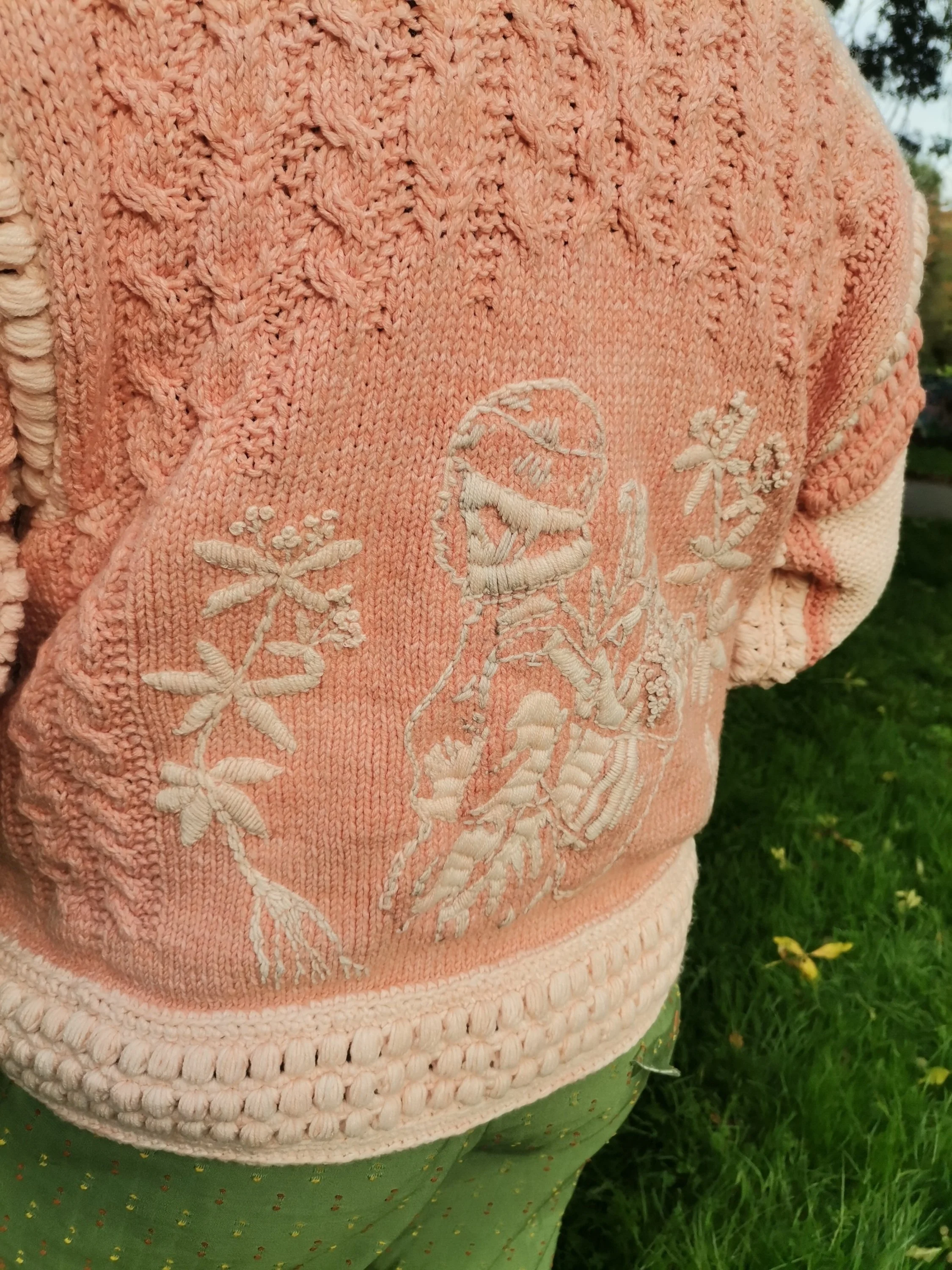
The cardigan is both a wearable garment and a standalone artwork. Its textured stitches of cables, bobbles and ribs are complemented by embroidered imagery of a woman harvesting produce on the back, celebrating the enduring connection between people, plants, and traditional textile practices.
Madder has coloured textiles for centuries, linking contemporary craft with generations of makers. In Old English it was known as mædre, and throughout history it has also been associated with traditional herbal medicine.
The Harvest Garment is a celebration of slow making, natural colour, and the idea that humans are not separate from nature, but active participants within its ecosystem.
After Two Attempts
This jacket began where most things worth making do, with looking, noticing and getting it wrong.
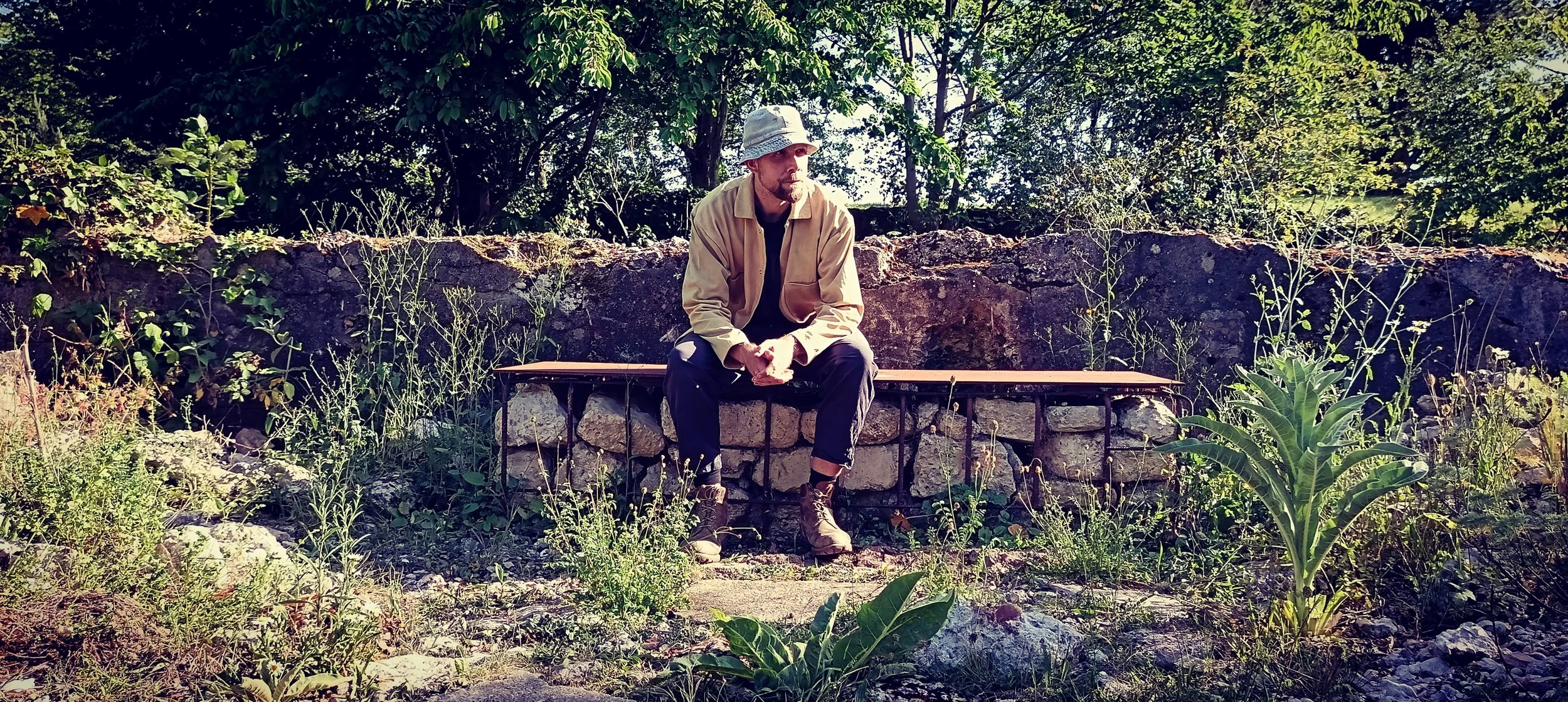
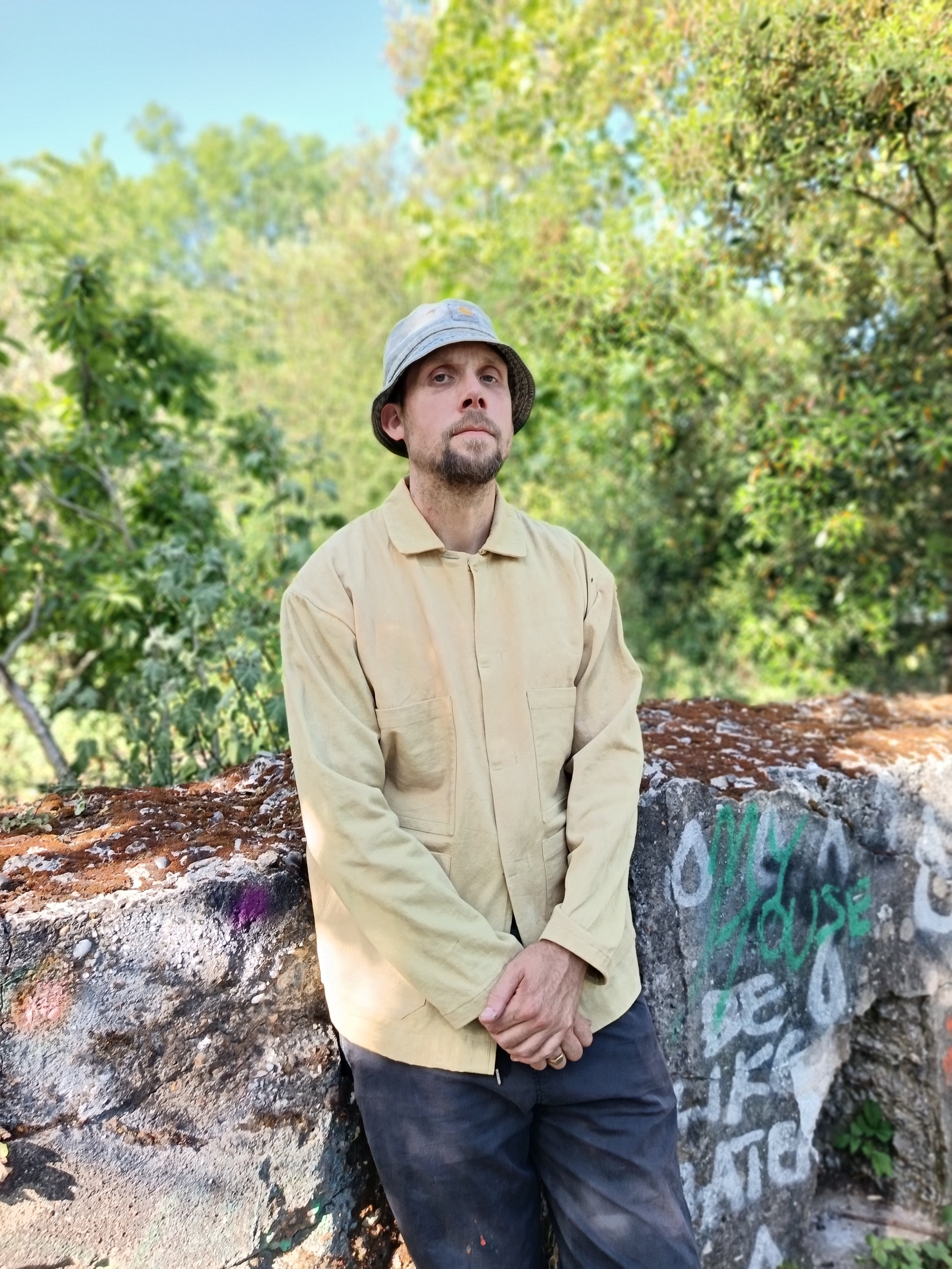
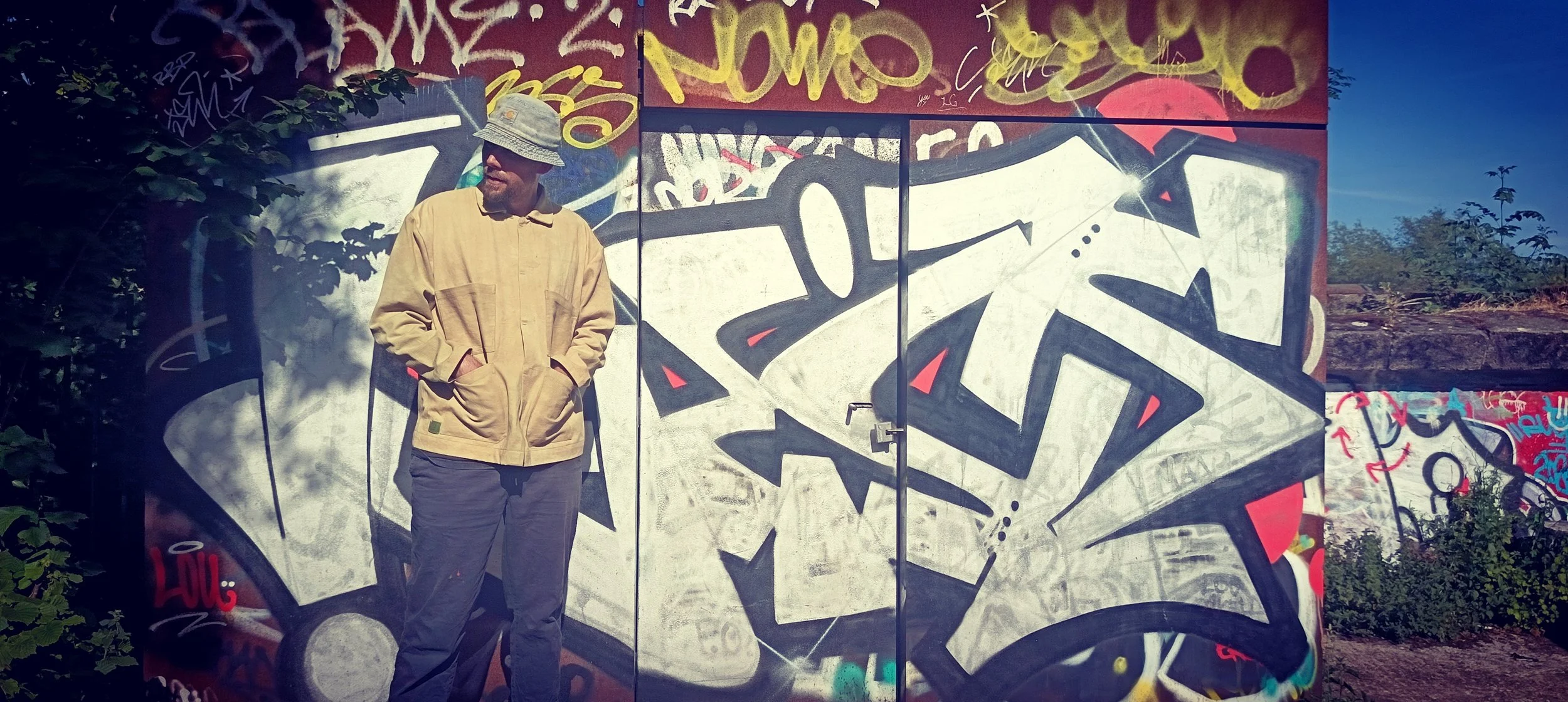
For Steve Williams, gardener and one half of Wild City Studio, green was the request and although a simple word it was yet a complicated colour. Plant greens like to resist certainty instead, shifting, fading and almost arguing back.
I started with nettles, harvested patiently from the local park in Markfield, hands stung, a heavy bag, the first dye bath seemed soft, but still convincing. But fabric, especially cotton, likes to morph into other colours once out of the pot so fading is mostly inevitable. I went back for more nettles, but two weeks later, the season had already moved on. The colour was more muted, not so yellow, not quite what I was hoping for but I persisted all the same. A jacket was made, then unmade not just in my mind, but actually.
Returning to the pot and the advice of the wonderful natural dye & print expert Florence.
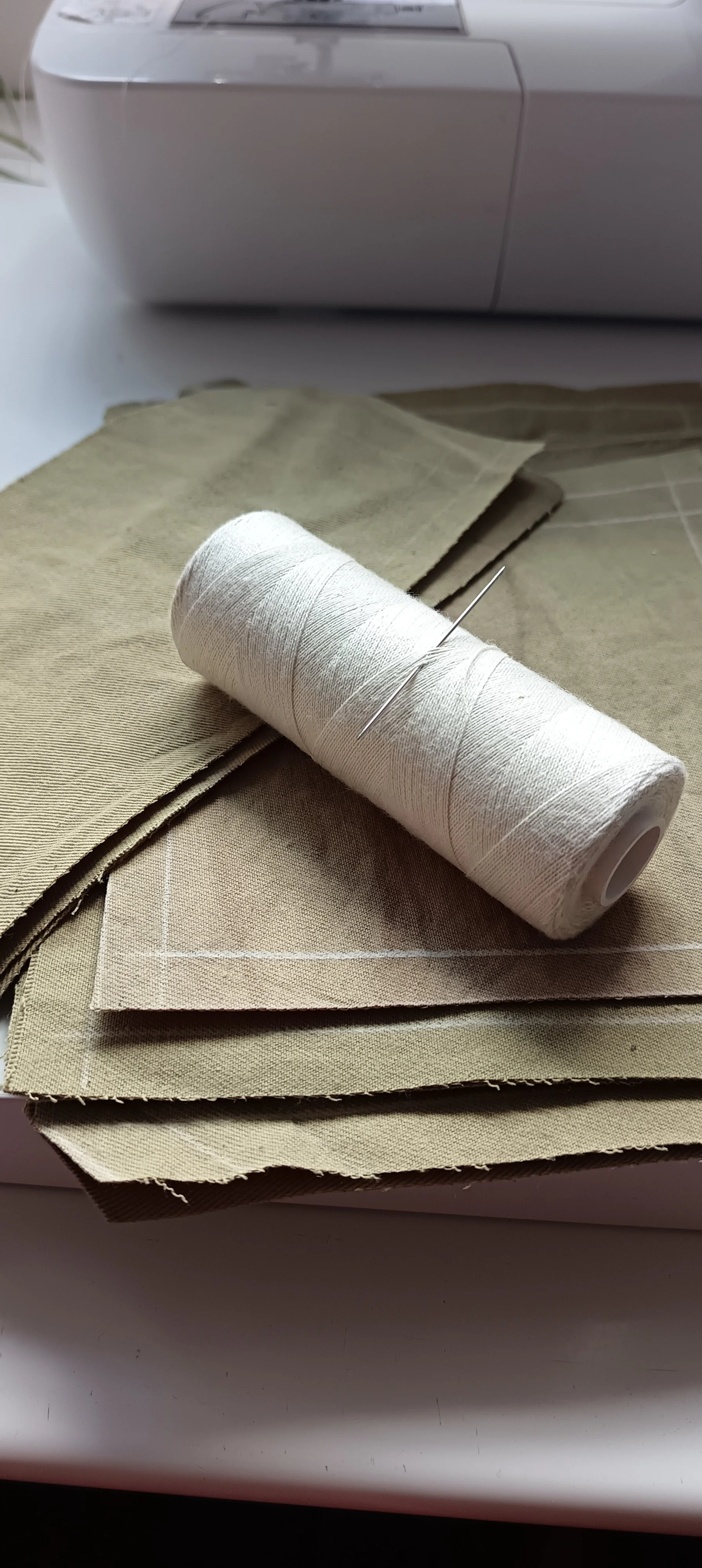
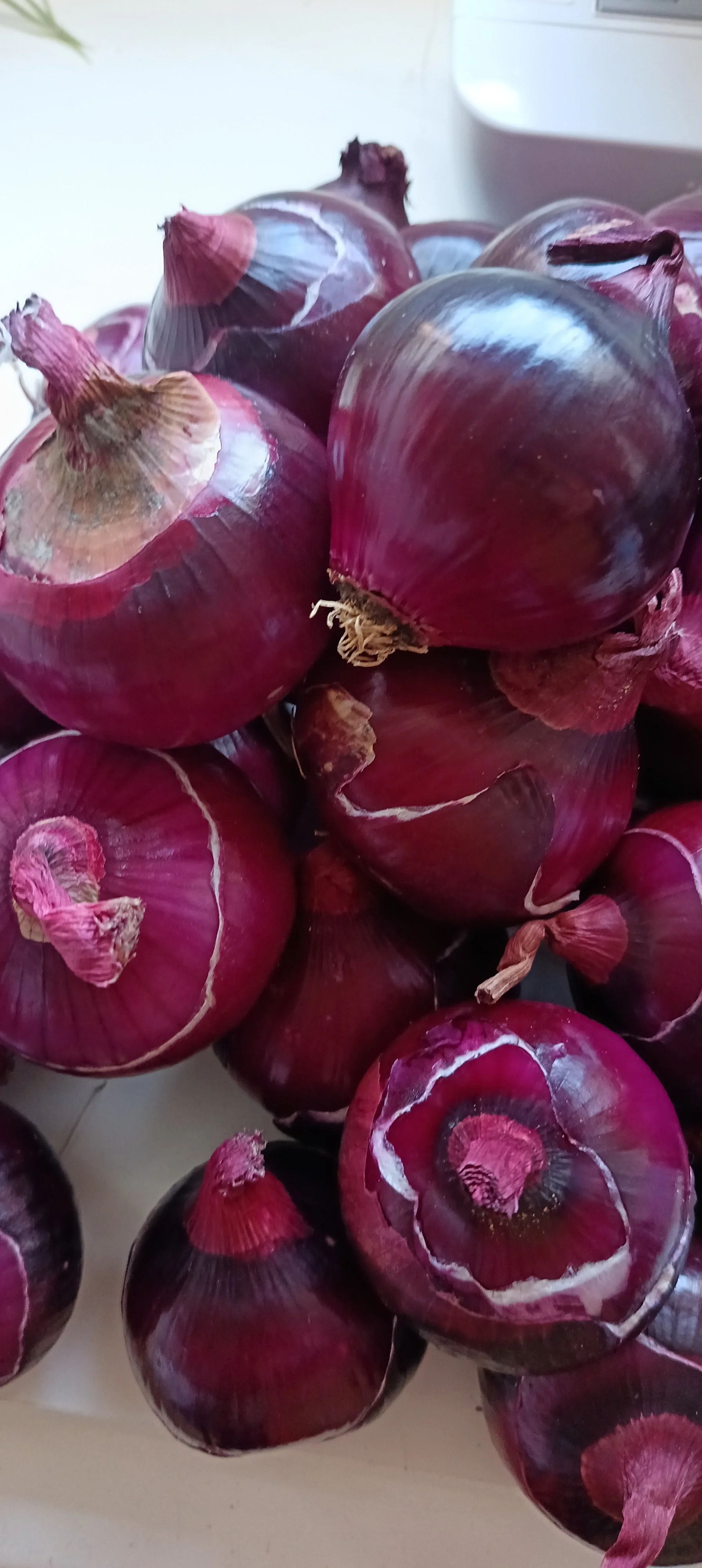
Three bags of red onion from the local Turkish shop was not quite the foraging I had in mind. Skins peeled one by one, with iron added to persuade the colour to change. The burgundy darkened, then turned inward, settling into an earthy green that finally felt right. The fabric soaked, cooled, oxidised and time did the work.
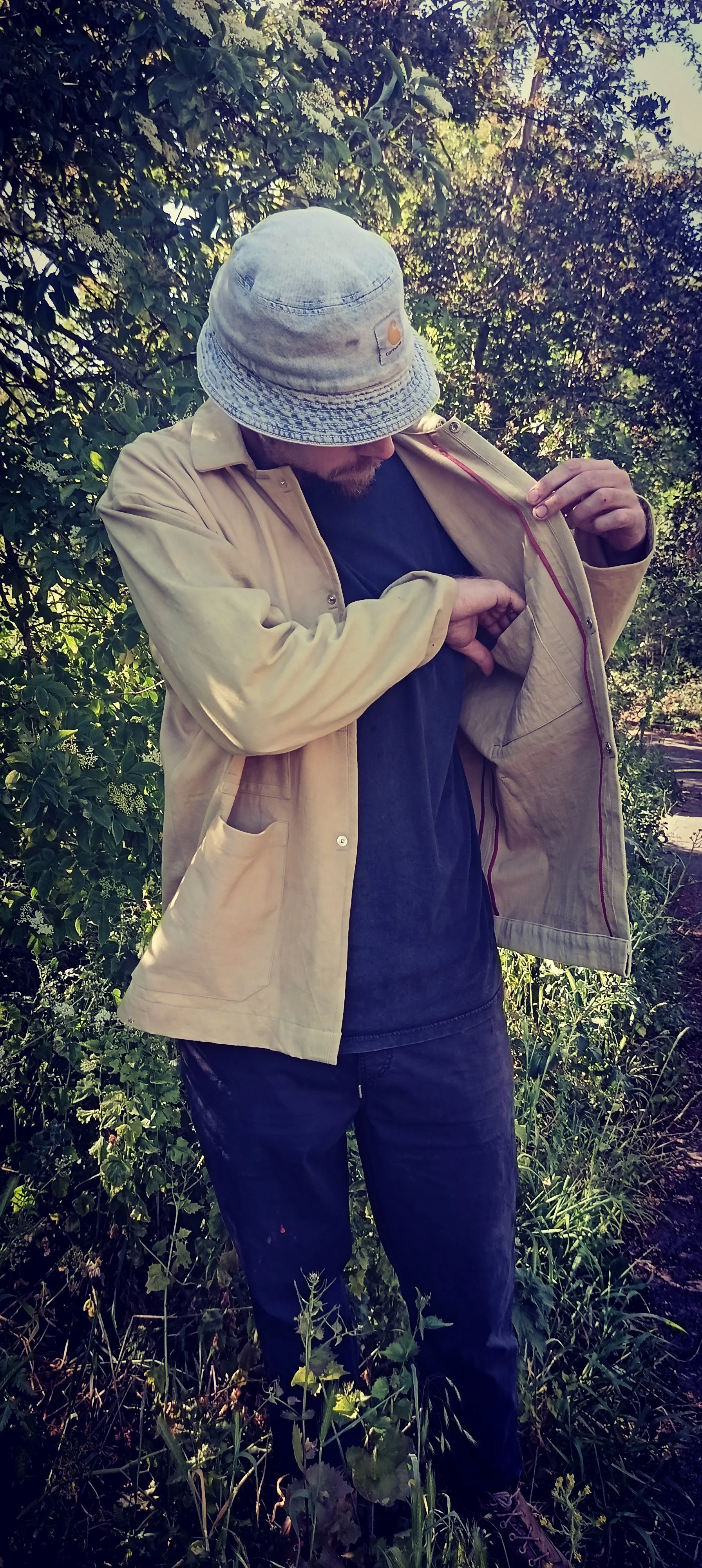
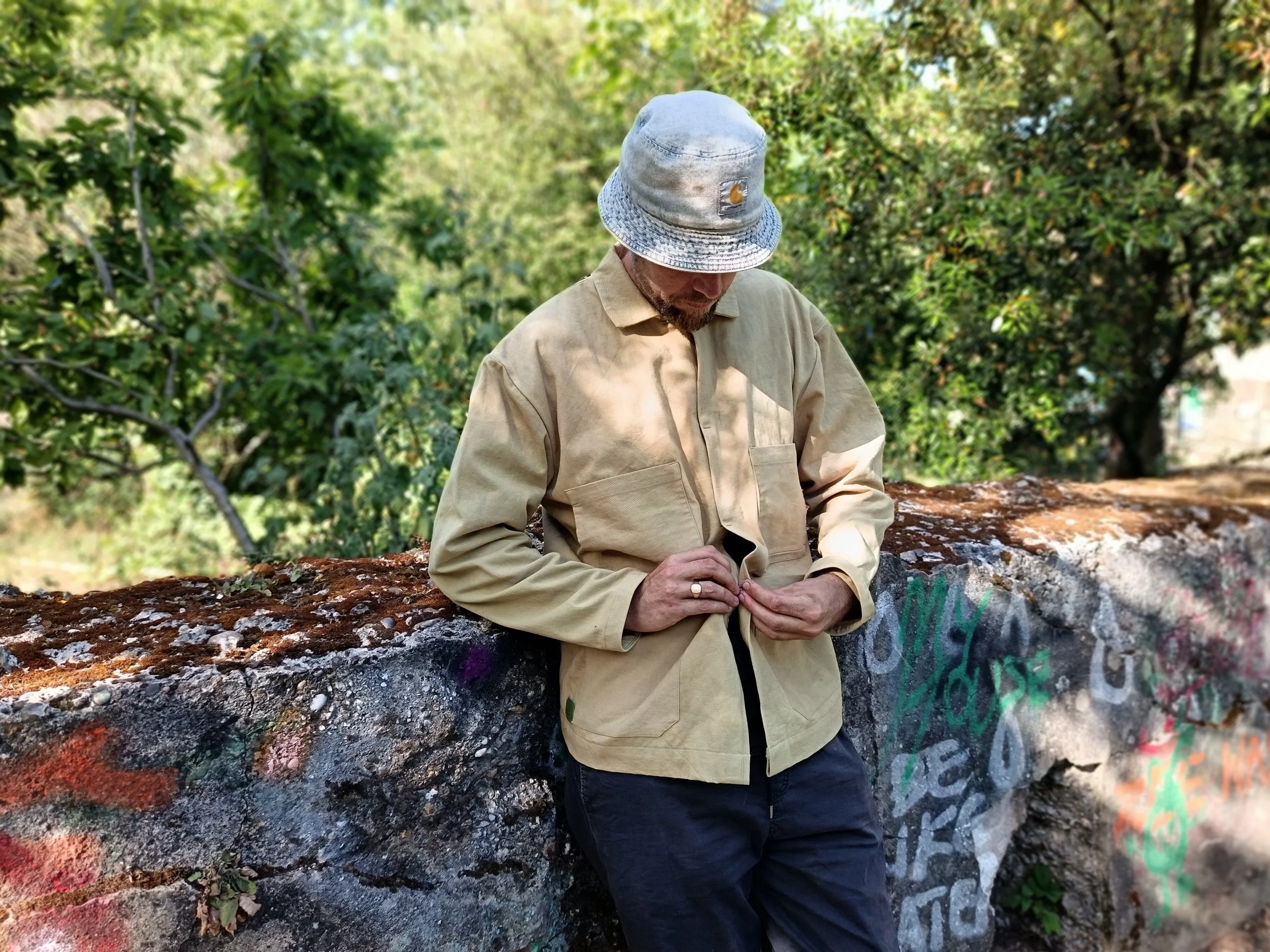
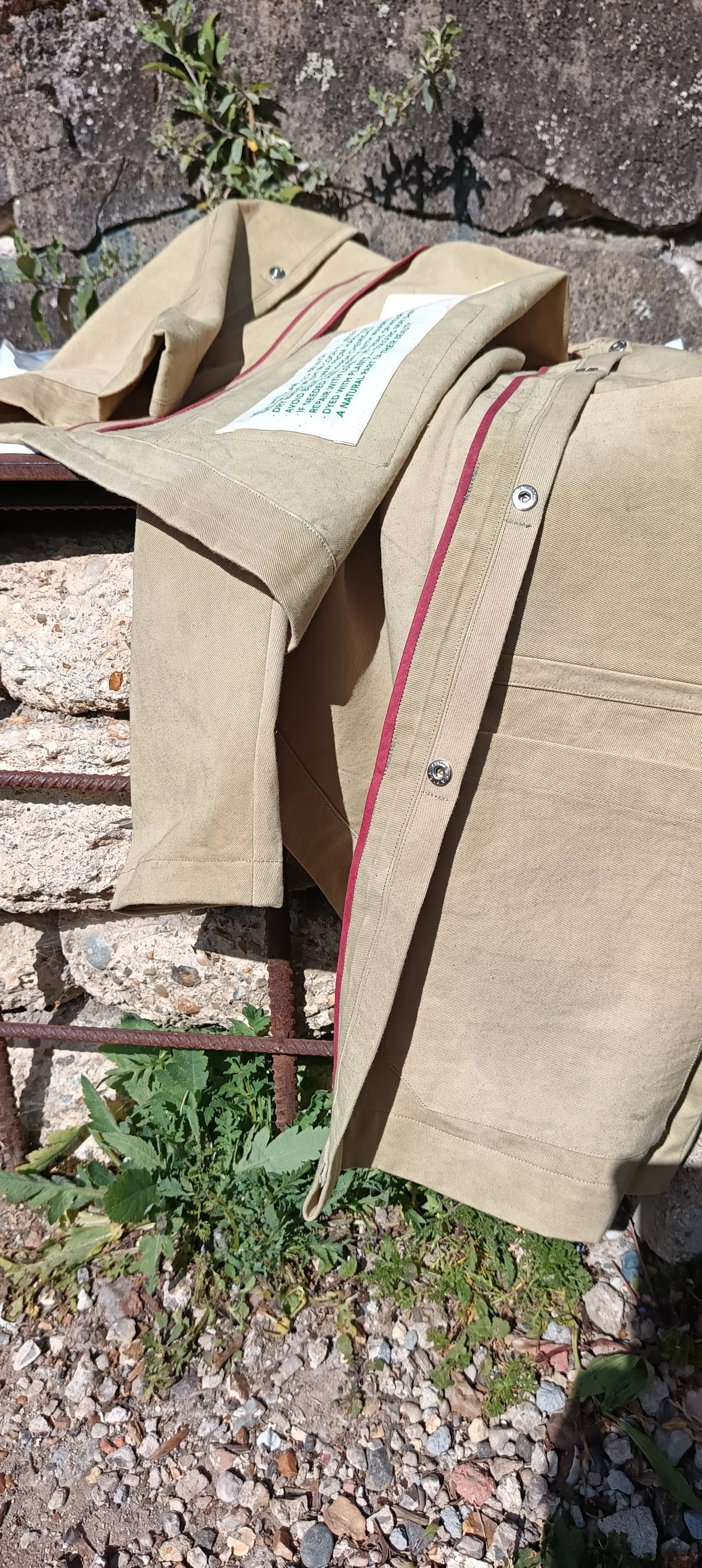
Once ready, it was pressed flat and again pattern pieces laid like a map, shifted to fit, finally cut & then stitched together. Seams bound in rust coloured bias binding, poppers instead of buttons for functionality with double-access pockets built to be used.
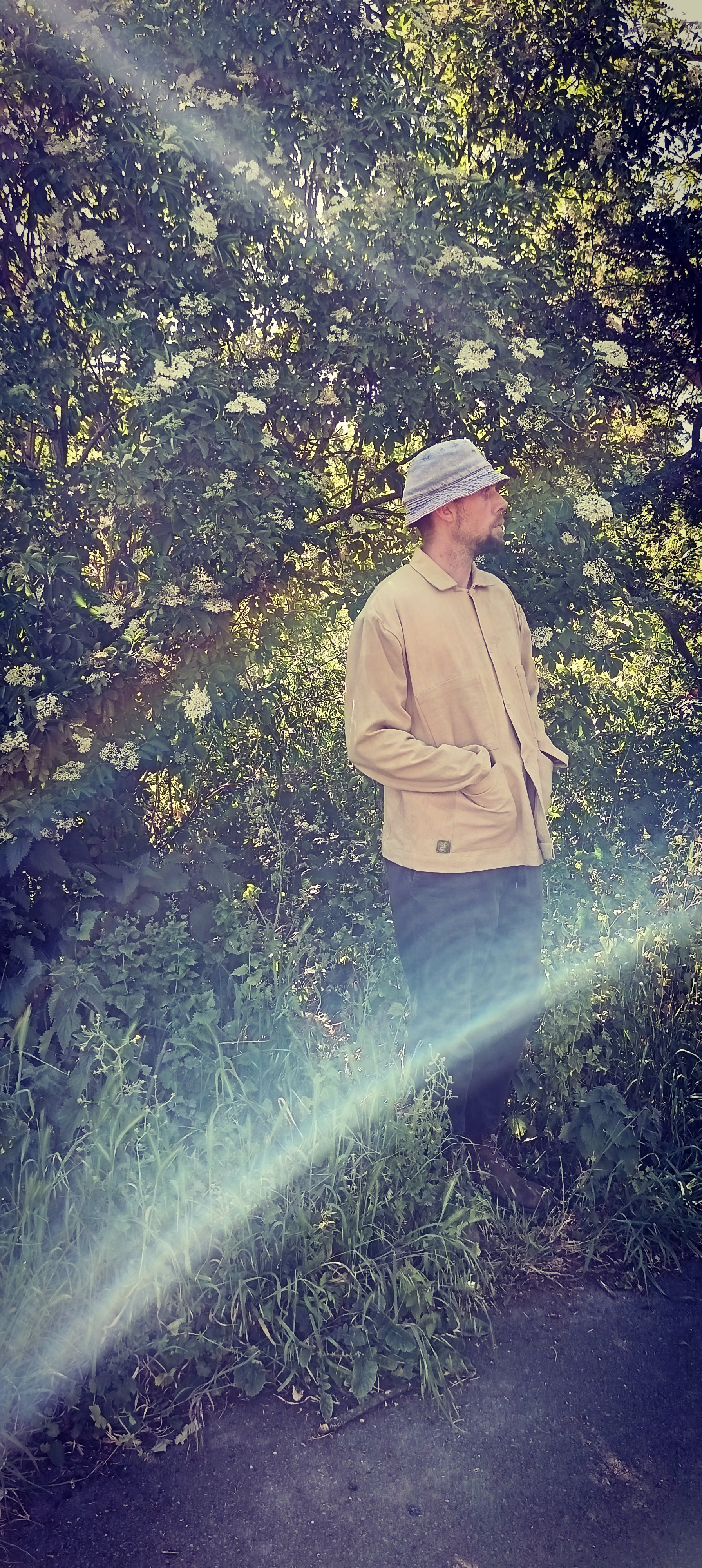
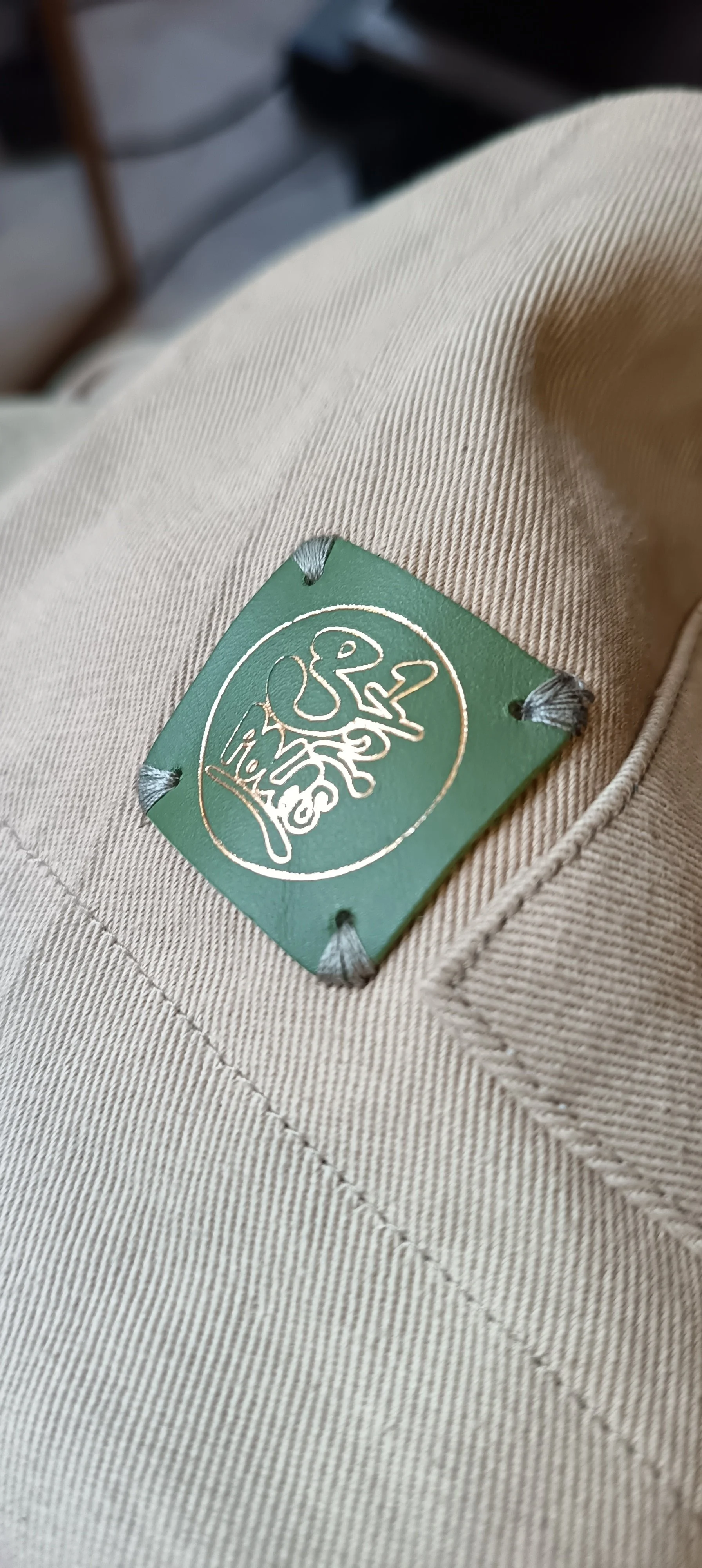
This is a utility jacket shaped by compromise, patience and place. Made for someone who works with soil, weather and repetition. Made under the ethos of my budding brand 3 and Half Poles, where function holds memory and colour carries the trace of how it came to be.
Interview with Steve Williams
Romany: Do you want to give a quick intro of who you are?
Steve: I’m Steve. I’m co‑director of Wild City Studio. We bring nature into cities and build community spaces, often in forgotten corners. I also run my own design practice, Steve Williams Landscapes.
Slowness, Observation, and Learning From Plants
Romany: Gardening is often described as slow work. Where do you feel slowness is most necessary in your practice?
Steve: Slowness is interesting. The way I garden, or design planting schemes, always starts with observation. Exactly like what we do in Markfield Park. We put everything in and then we watch it. You don’t have to do loads. I say this to private clients all the time. It’s about changing the idea of what a gardener is and what gardening means. People think they have to mow the lawn and weed every weekend, keep everything manicured. That’s not how I design anything. It’s really about doing much less.
I often tell people to get out of the mindset that they need to be an expert gardener. People seem to relate more to the idea of being an editor. You learn how to look after your space. You don’t need to know all the rules or plant names. The plants tell you how to look after them.
There’s a lot of observing, which is slow because you have to wait for the seasons. When you plant something, you wait. When you throw seeds down, you wait. Gardening teaches patience automatically. You work with the seasons.
People are almost allergic to gardening because it feels magical or mysterious. The gateway is taking a step back and looking at what’s going on. Then it starts to make sense the more you understand it.
Romany: That’s interesting. When I started dyeing with avocado, I thought it would be really hard. I thought I’d need courses and chemistry. But I didn’t. It was just trying something. I think that’s important, because you assume there’s a correct way to do things.
Steve: Absolutely.
Working With Living Systems
Romany: How does working with living systems change the way you think about control and failure? For context, when I work with natural dyes, I find it hard to control anything. With the first jacket I made you from nettles, I picked them, then went back two weeks later because I didn’t have enough colour intensity or fabric. The season had shifted and the colour was completely different. I didn’t embrace it. I made a whole new jacket.
Steve: I think it’s about being okay with failure. That’s fine in your own garden. It’s different when I’m designing something for a client. You have to be prepared for it to completely fail. But there’s always an element of that.
I love working with people who understand those processes. We plant with intention and ambition. With plants, it might end up even better than you imagined. It will end up as something because you’re collaborating with living systems. They do what they want. Some things take, some don’t. That’s the joy of it. It challenges the idea of failure or success. You need some intention, then you let go. It’s a best guess. Then you see what happens.
Romany: Do you think that’s your mindset, and the intention is to work with people who understand that? Like with the jacket, you wanted green and I got a yellowy not‑very‑green. I convinced myself it was green enough to make the whole jacket. But it’s different when you’re doing something for someone else.
Steve: Ideally I work with people who understand that. There has to be a decent result. In your own garden or project, you can play, and that’s the best way to learn.
The last thing I want, because I work with natural systems, is to force my agenda too much. The worst case in planting design is when people want a naturalistic look but still want specific plants in specific places. It will never look like that. You can set it up, but then you need a gardener to keep it in stasis.
My most radical version of a garden, in the right setting and sun, is setting up the base and then seeing what happens. Maybe throwing some seed. Maybe letting things come in. You set up walkways or a place to be. In a small urban garden, you need a place to be and a way to get there. The rest can be wild. Let things self‑seed. Once they do, you start learning. The plants tell you. If nettles dominate, you learn to keep on top of them. If delicate things come in, let them harmonise. Let tree whips come in. I rarely have a client who lets me do that.
Control, Culture, and Anxiety Around Gardening
Romany: Why do you think people want control? It crosses everything. We resist nature, even our own nature.
Steve: It’s cultural. The idea of a garden, a front garden, the lawn. The lawn is the classic thing. I say, you don’t have to have a lawn. People are shocked.
Romany: Where my allotment is, the gardens that back onto it, hardly anyone keeps their garden. Not even mowing a lawn. Those manicured 50s lawns get flak, but people took pride. They knew what they were doing. It didn’t feel intimidating. Most people could mow grass and put in some border plants.
Now people don’t know what to do. If you suggest putting potatoes in or using the space, they say they don’t have time. People like nature but feel intimidated. They think if they let plants go, everything will take over. So they pave everything. Or put down AstroTurf.
Steve:People come to me anxious. They want plants but worry they won’t know how to look after them. My thing is to change their perception of what a garden needs to be or how much effort it needs. Change the perception that you need to control it. You don’t. The last thing a garden should be is a source of anxiety. People look outside and think they have to weed the paving. You can set it up differently.
A Good Day in the Garden
Romany: What does a good day in the garden look like to you?
Steve: Blimey. On my own. A good day in the garden depends on the garden, but if we say this one… there’s a lot of ebb and flow here. Sometimes it’s a place for being alone. I quite like being in here on my own. I don’t have my own garden at home. I don’t have an allotment. Early in the morning, like this, with the sun out, spring helps. There are bits to do. Quite often I’m just wandering through and observing things.
There are periods of the year where there’s a lot of heavy work, and the rest of the time you’re just observing. But some of the best moments are when people come in during volunteer sessions and we just sit around chatting. There isn’t always loads to do. It becomes a social thing.
It’s a community garden. There should be times when people can come here and be on their own, and times when people can share ideas. Eventually this place will be somewhere people can share food. For me, that’s part of it. And I like building stuff. I get to build things too. It’s not just gardening.
Romany: Do you find it hard to call this a garden?
Steve: I know what you mean. I’m happy calling it a garden because it challenges what a garden is. It is a garden to me.
Romany: I noticed the old sign still says South Tottenham Community Garden, and now we’re naming it Markfield Community Garden.
Steve: Yeah. It’s still a community garden. It’s interesting though. When you asked the question, I realised that when people say “garden” it conjures a certain image. And also, I don’t have one.
Romany: Same.
Clothing, Utility, and Working Outdoors
Romany: What do you need from a jacket when you’re working outdoors?
Steve: Pockets. I need pockets. When I was working more as a gardener, I wore these thick Carhartt work trousers. They had a slot on the side, maybe meant for a knife, and my secateurs always went in there. I still have the muscle memory. When I’m gardening now, I still go to put them there. They go in my back pocket now, or in the pocket on the jacket you made me.
It meant I never lost them. Whether it was secateurs, a pruning saw, a pen… if I put something down and moved away, I’d lose it. If I have pockets, everything stays with me. So pockets are massive. Not literally massive, but important.
Romany: How do pockets, fastenings or weight affect how you move through the day? Do they matter?
Steve: How do you mean?
Romany: The jacket originally should have had buttons, and you said you preferred poppers. Do those things matter? Do you wear lots of layers or one layer? Do you need quick access?
Steve: I’m a layers person. And now you mention it, I tend not to do up jackets or shirts unless I’m cold. Otherwise they just hang open. Because I wear layers anyway jumpers, T‑shirts, then something over the top, it’s mostly about utility- keys, tools, whatever I need.
Materials, Ethics and What Clothes Have Been Through
Romany: Do you think about what your clothes have been through before they reach you? Are you bothered about the process of a garment, or do you just want something functional?
Steve: I tend to lean towards things that are ethically made, or organic. I don’t look into it loads, but I gravitate that way.
Romany: Do you wear a lot of natural fibres?
Steve: What counts as natural fibres?
Romany: Cotton, wool, linen…
Steve: Yeah. I like natural stuff. I get really annoyed with jeans now.
Romany: Because they’re stretchy?
Steve: You just can’t get normal jeans. You either get the £300 selvedge ones or the crappy stretchy ones. I just want a standard pair. I keep seeing cool guys wearing them and I never ask where they get them, it’s probably the £300 ones.
Romany: There’s a shift toward ‘athleisure’. People go to the pub in tracksuits now.
Steve: Everything used to be about function for me. People might think I don’t care how I look, but it’s actually quite orchestrated.
Romany: It’s an art — looking like you don’t care :-)
Steve: Exactly.
Boots, Running, and Aesthetics
Steve: This isn’t really relevant, but when I was a teenager I never wore boots. If I had to run or get away from something, I didn’t want to be weighed down. Then at some point I started wearing boots. It was like saying, I’m not running away. I’ll face whatever happens. When my phone got snatched last year, I wished I’d been wearing trainers. I ran after him in steel‑toe boots and couldn’t move.
Romany: Hahaha
Steve: Yeah. But I always wear boots now. Even after that kind of thing.
Romany: What were you wearing before?
Steve: Trainers. Converse, high tops, skate shoes. I’ve thought about going back to trainers because I don’t think boots are great for my feet.
Romany: What I like about your aesthetic is you always look like you’re working. Even when you’re dressed up, you still look like you’re ready for action. I’m obsessed with that aesthetic as workwear comes from manual labour, and you’re actually doing that.
Steve: I do wear boots on nights out. I don’t have other clothes.
Romany: I like that you have a uniform.
Steve: I do. I don’t know if it’s neurodivergence, but I have loads of the same thing. I wear something until it falls apart, then panic about replacing it. Then something else appears and I start wearing that. It’s like school uniforms. I appreciate them. You don’t have to think about what to wear. I wake up and put on the same jumpers. I’ve got five of these.
Romany: Did you buy them all at the same time?
Steve: Yeah. If something fits me well, I go hard on it. Things don’t fit people my size easily. T‑shirts and jumpers are often too short or too wide. So if I find something that works, I buy loads.
Colour, Green, and Meaning
Romany: Green is everywhere in your work. Do different greens have different meanings?
Steve: I wouldn’t say meanings, but green is massive for me. I often design with green in mind, especially in small city gardens. They’re usually shady or glady, so loads of colour isn’t always possible. What I talk about a lot, and what’s happening here, is different tones and textures of green, different leaf shapes. It’s all greens. There’s something deeply calming about being immersed in it. You get pops of colour, like the blossom now, but the backdrop is green.
Another designer once said to me, “You’re quite cautious with colour, aren’t you, Steve?” They didn’t mean it offensively, but I took it that way. It stuck with me. And I realised I am cautious, or considerate. Even when I use colour, I think about what happens naturally rather than the big blousy cultivated things. In a meadow, colours are softer, more pastel, not in your face. Even when it’s colourful, it’s subtle.
Romany: People are like that with colour in fashion too. They think using every clashing colour makes you good with colour. I think it makes you indecisive.
Steve: Exactly.
Romany: But aren’t you colour blind to green?
Steve: Slightly. Certain shades of green and pink. Two stories I always tell. When I was a teenager, we were throwing a green Frisbee for my friend’s dog. It landed on the grass and I couldn’t see it. He said it was obvious. Once he pointed it out, I could see it, but before that it was invisible.
The other story is from fruit picking in Australia. We worked on a tomato farm. You got paid per bucket. You had to pick tomatoes that were just coming into ripeness. You flip the tomato and if it had a slight blush of pink with the green, that was perfect. I couldn’t see it. Everyone else was picking loads. I panicked and just filled my bucket with what I thought might be ripe. At the end of the day, the farmer checked and said I wasn’t getting paid. He thought I’d done it on purpose. I hadn’t, needless to say I didn’t go back.
So yeah, green and pink together are tricky for me.
Seasons, Emotion, and the Rhythm of Work
Romany: How do seasons, if they do at all, shape your decision‑making emotionally as well as practically?
Steve: Emotionally, I think they’re quite deep. Everyone feels those things, whether they’re a gardener or not. Different seasons signal different things, but we don’t necessarily live that way. Winter should be a time where you adapt, almost hibernate, but we keep going on this treadmill and then wonder why we feel awful. You’re supposed to be grounded in the resurgence of things.
There are different jobs and opportunities in different seasons. The blossom now feels like a celebration. I often think the best time to plant gardens is autumn. Then everything has a chance to bed in for the next year. As a designer, when someone asks for a timeline, I’ll say if we build it over summer, then autumn is perfect for planting. Not every job works that way, but it’s ideal.
Romany: Sometimes when it rains in summer, I feel relieved because everything I’ve planted will live. I find summer stressful as a gardener. I love those melancholy overcast days in summer. People think I’m miserable, but it gives things a chance to survive. Summer is full of flies, bolting, crispy leaves along with a lack of water lately.
Steve: People often say to gardeners, “Did you have a summer?” It annoys me. If it didn’t happen on their weekend or holiday, they think it didn’t happen. It’s been sunny all the time. As a gardener, you’re aware of how wet it’s been or how hot. Every year I think we’ve had a great summer, then someone says, “Where is summer?” and you think, we’ve had three months of sunshine. I’ve been out in it.
Wearing Plant‑Dyed Clothing
Romany: What do you think when you wear something that’s coloured by plants rather than chemicals? Do you think anything or do you just wear it?
Steve: How often am I doing that? Well, I’m doing it now. I said earlier it looked a different colour and you said it’s living, so it will shift and change. That blew my mind. A massive thing for me is patina and things that change. When I design anything outside, it’s not about keeping things the same. I use materials that develop their own character and charm.
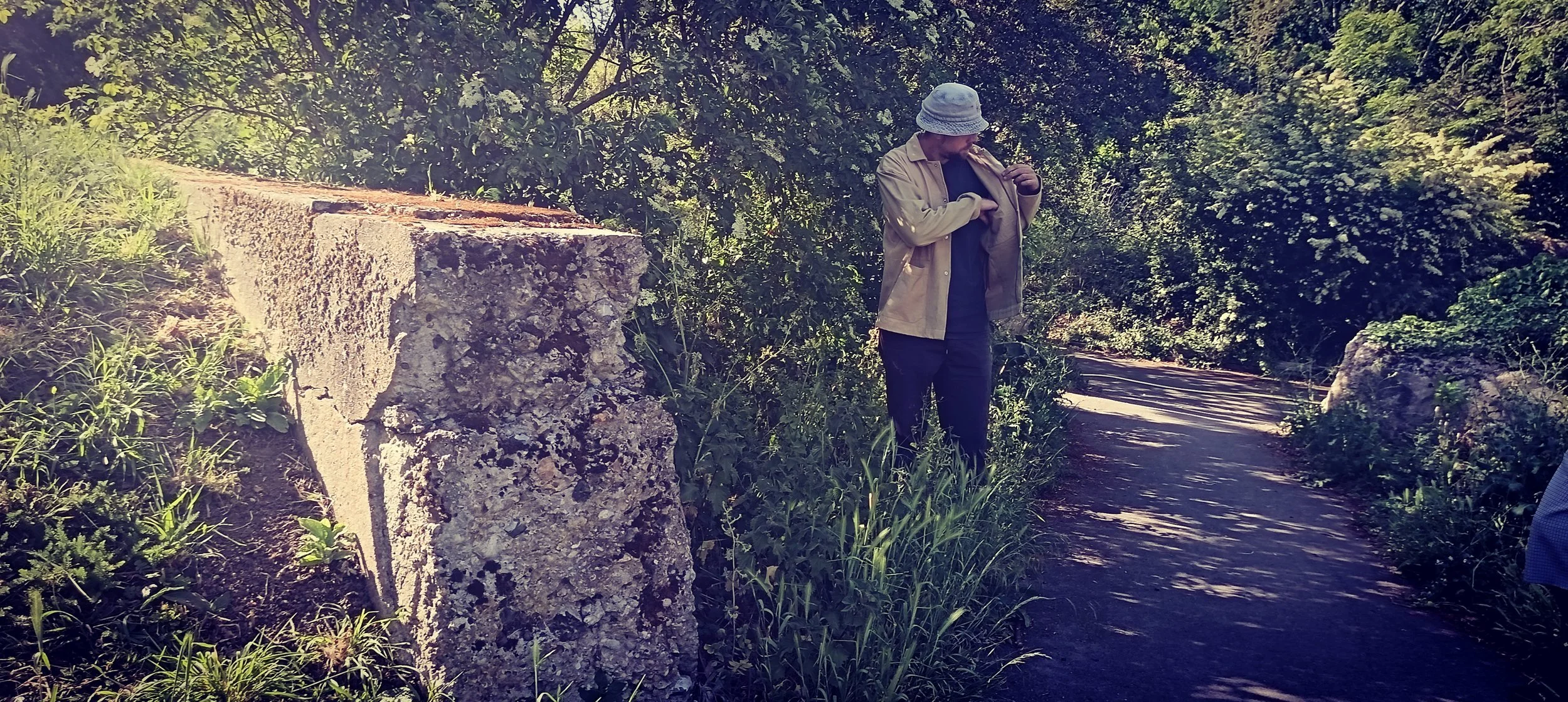
When you told me the jacket would change, I thought that was the coolest thing. You said there’s a hint of burgundy on the back because red onion give a burgundy colour, then you add iron and it shifts to green. That’s amazing. Any of my clothes, I want them to age. This jumper was black once, it’s faded and bleached. Anything that changes and ages, I’m in.
Wild City Studio: Care, Labour, Education
Romany: I’ve presumed Wild City Studio sits between care, labour and education. If you agree, where do you place yourself within that?
Steve: I hadn’t thought of those exact words, but they’re right and I guess I cross all of them. The labour is something I love. Everything I’ve been doing here isn’t work to me, it’s play. When I first started as a gardener, I exercised a lot because I felt better when I exhausted myself. I was depressed in my twenties and a bit lost. Exercise helped but didn’t have longevity.
We often live sedentary isolated lives. I wondered how to get that physicality into my lifestyle. Working the land is what we all would have done and gardening felt like the answer. Now I spend a lot of time designing in front of a computer again, so the labour side is what I got into it for. The craftsmanship and building resonate with me deeply. If I’m not doing those things, I get sad. Things start going wrong, I need that connection, creativity too.
Education is another one. I used to be an artist. My artwork was about challenging perceptions. In here, I have great conversations with the local Jewish kids. They see us working and think we’re going to smarten everything up. I tell them the best things are the walls. The mosses on the walls are rare, they only occur in these niches created over time on the concrete. It’s beautiful, a man‑made structure creating opportunities for plants. That’s what I love about the educational element.
With private clients, I run workshops for people with lower budgets. We chat about my philosophy and design the garden in real time. I love showing them a new way of thinking about what a garden is. That education, that shift in perception, gives me a massive kick. It’s how I feel I can make change.
Romany: It’s interesting you didn’t mention care, because the way you care for this land is visible. People observe it. Your presence shows it. You’re leading by example. This space isn’t derelict anymore and actually underpins everything you guys do.
Steve: I think care probably does underpin it all. There’s care in everything I’m doing. I take it for granted.
Local Context, Heritage, and the City
Romany: How important is local context in terms of soil, community or weather to the way you work?
Steve: Really important. Context is everything. We get to have fun in here and be radical and this is an extreme version of a space. You don’t get these walls everywhere. But the principles are what matter. People think Wild City only does gnarly forgotten spaces and we love those, but the approach works in private gardens too. It’s about appreciating and doing things intentionally.
We have a beautiful backdrop here, context and heritage are important. Me and John used to debate the heritage of the city. People often slam humans as a scourge on the planet, but Wild City Studio celebrates the beauty of the city, the beauty of community, the beauty of people. Everything we’ve made has complicated histories, but it’s part of the tapestry.
There’s this idea of greenwashing, making everything green. That’s not what a city is. A city is more interesting and dynamic. Music, food, fashion, art, gardening and nature should be on the same level. Nature is even more fundamental, it’s about celebrating heritage and bringing ways to connect with nature and each other back into cities.
Romany: It’s the people element that’s overlooked. This space is for people. It should coexist with the plants. You’re keeping things in some kind of order, but you’re also mindful that people want to be in here. You’re not coming in saying, “Look at this amazing garden we’re creating for everyone to look at.”
Steve: Before we came here, this space was mostly used for antisocial behaviour, guys smoking weed or doing whatever. In many ways, it was theirs first, our thing wasn’t about kicking people out, it was about bringing more people in and creating a new balance. There are loads of times when no one is here except a couple of guys sitting, that’s important in a built‑up area.
People I wouldn’t expect to talk to me walk through and say, “This is wicked, man. I love what you’ve done.” Coming from people not in gardening or horticulture, that means a lot. If someone likes being in here, then job done.
Utility Beyond Function
Romany: What does utility mean to you beyond function?
Steve: I want to say peace.
Romany: Interesting.
Steve: Utility is about security, agency, being able to do things. Peace comes from being ready, ready for action. Like the boots thing. I’m ready for whatever, unless it’s something posh. If I’m not dressed right, I feel anxious. Yesterday we did the tour and I was wearing jeans that fall down, they’re not good for working. I needed a belt. I was going to come to the garden after but thought it would be annoying. They weren’t utilitarian enough, they weren’t ready for action. Adaptability too, peace is the extension of that, I feel at ease when I’m ready.
Romany: I’m glad I asked that. It’s a great response.
What Plants Teach
Romany: What is something plants have taught you that people rarely talk about?
Steve: Letting go. It goes back to being at ease or at peace. The need to control things. There are lessons in stepping back and observing. You can apply that to loads of contexts.
Romany: Do you personally do that?
Steve: I think I’m like that naturally. I gravitate toward what I don’t have to interfere with, but I am doing a lot and observing. I undersell what’s behind it. I’m like that in my demeanor. I watch before I react. I’m not reactionary.
Romany: What I like in conversation with you is that you take your time to answer. It’s rare. People are ready to talk, not ready to listen. The way you describe observing is a kind of listening.
Steve: That’s a nice way of putting it. When I was young, I was extremely shy. My friends used to say, “Steve doesn’t say a lot, but when he does, it means something.” When I became more confident, maybe in my thirties, I started chatting more and felt like I lost that. I’d be chewing my mate’s ear off about motorway verges and think, this isn’t it. I’ve lost my enigmatic stoic thing. Maybe that guy is still there. It just needs to be a balance.
The Jacket
Romany: How would you like your new jacket to age with you?
Steve: I want loads of different greens and burgundy. The way an item of clothing ages and develops with you is important. The scuffs, the rips, the way it molds to your body, it becomes part of you. Me and my mate at uni used to call our coats our armour, it felt solid. Everything tells a story. Something becomes a uniform for certain things. I have jumpers for best, then they become gardening ones. I prefer the ripped ones. This jacket will be for gardening or day to day. A ready for action jacket. Peace. Clothes are part of you. They communicate who you are.
Romany: Steve, thank you very much. That was really enjoyable.
Steve: Pleasure. I didn’t want it to end, although fourteen questions is hefty.
Romany: Thank you so much.